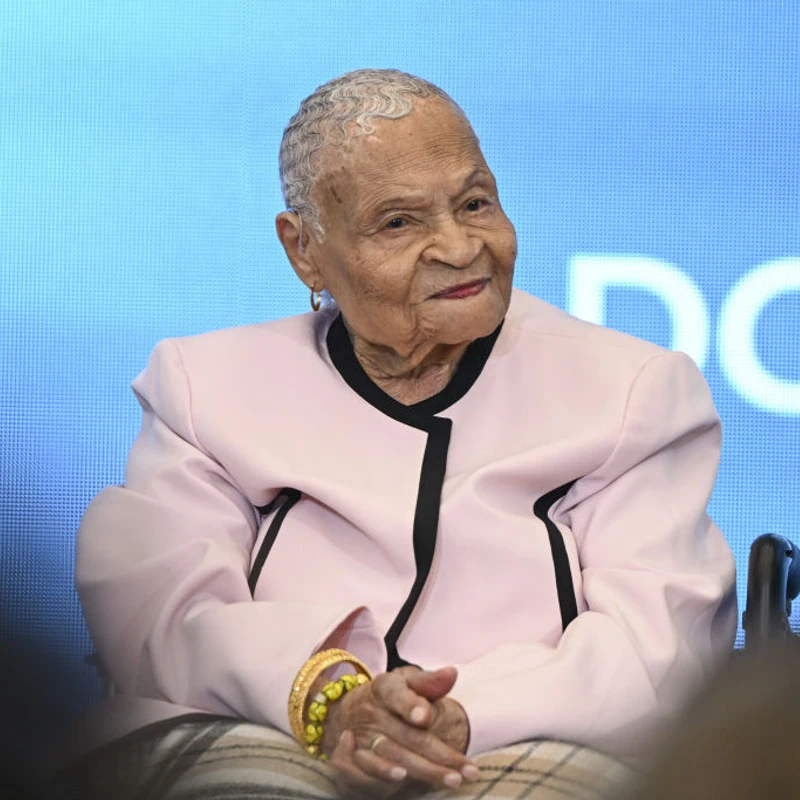
The fight for justice and remembrance has lost a powerful voice. Viola “Mother” Ford Fletcher, one of the last known survivors of the horrific 1921 Tulsa Race Massacre, passed away peacefully at her home in Tulsa on November 24th at the remarkable age of 111. Her passing marks the end of an era and underscores the urgent need to keep the memory of this tragic event alive.
A Life Dedicated to Bearing Witness
Born in Oklahoma in 1914, Fletcher was just seven years old when a white mob violently attacked Tulsa’s Greenwood District, known as “Black Wall Street.” She vividly recalled the idyllic Black community before the massacre, a thriving hub of hundreds of successful Black-owned businesses, which was reduced to ashes and devastation. The attack resulted in the deaths of an estimated 300 people.
Fletcher’s grandson, Ike Howard, shared that she passed surrounded by loved ones, with a “beautiful smile on her face,” reflecting her lifelong love for life and people. Throughout her decades of survival, Fletcher became a tireless advocate, pushing for justice, restitution, and acknowledgment of the massacre’s devastating impact.
Advocating for Justice and Reparations
Fletcher, along with her brother Hughes Van Ellis (who passed in 2023) and fellow survivor Lessie Benningfield Randle, filed a lawsuit in 2021 seeking reparations from the city of Tulsa. Despite their persistent efforts, the Oklahoma Supreme Court dismissed the case in June 2024, ruling that their claims did not fit the state’s public nuisance statute.
In her 2023 memoir, “Don’t Let Them Bury My Story,” Fletcher powerfully recounted the horrors she witnessed: “I could never forget the charred remains of our once-thriving community, the smoke billowing in the air, and the terror-stricken faces of my neighbors.” Her brother’s accounts echoed the same terror, recalling how their family fled with nothing but the clothes on their backs.
A Legacy of Resilience and a Call to Action
Despite the legal setbacks and the lack of financial compensation, Fletcher refused to let her life be defined by victimhood. Her grandson noted that sharing her story was a source of healing. “This whole process has been helpful,” he told the AP. Fletcher and Randle’s statement at the time of the lawsuit dismissal resonated deeply: “For as long as we remain in this lifetime, we will continue to shine a light on one of the darkest days in American history.”
A Justice Department investigation, released in January 2024, detailed the massacre’s lasting consequences, concluding that while federal criminal charges might have been possible a century ago, no legal avenue remains today. City officials have explored forms of support for descendants, including a “road to repair” plan focused on infrastructure and revitalization, but direct financial reparations have not been provided.
The fact that she died without any meaningful redress — not for herself, her family, or her community — isn’t just a legal failure. It’s a moral one. She would not want her passing to be the end of the fight. She would want it to light a fire under all of us. — Damario Solomon-Simmons, Attorney for the survivors and founder of the Justice for Greenwood Foundation
Viola Fletcher’s passing is a profound loss, but her legacy demands that the fight for justice continue. Her life serves as a powerful reminder that the echoes of the past continue to resonate, and honoring her memory requires active engagement, education, and advocacy to ensure the truth of the Tulsa Race Massacre is never forgotten and that meaningful repair is pursued for the descendants who still carry its weight.
How can we best honor Viola Fletcher’s legacy and continue the fight for justice? Share your thoughts and ideas in the comments below.

