Category: Tech and Business Updates

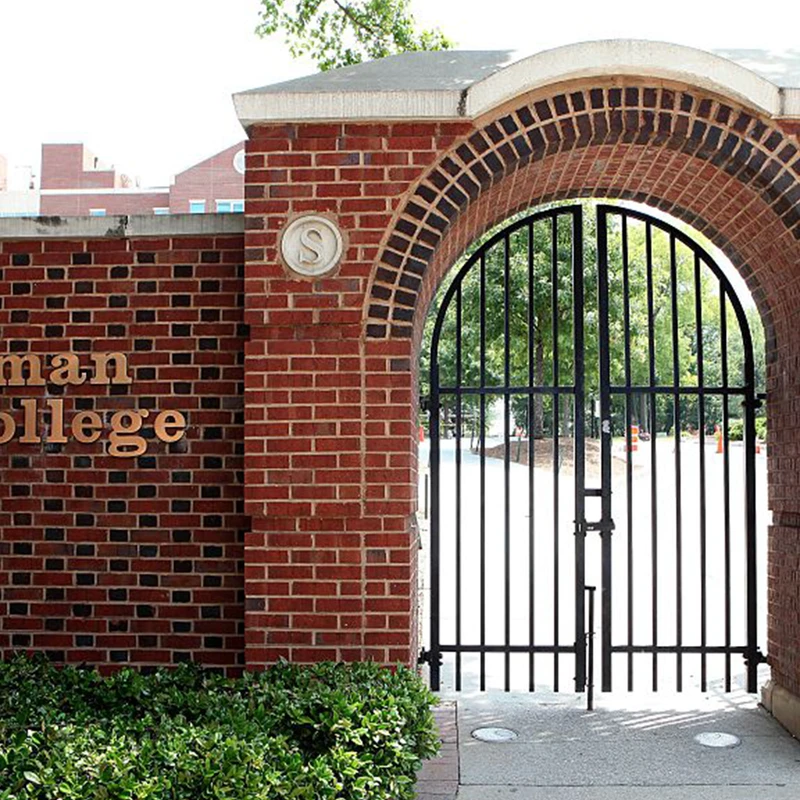
  • Spelman College’s Green Initiative Diverts Tons of Food Waste

    Imagine a college campus buzzing with activity, but instead of just lectures and study groups, there’s a powerful commitment to the planet. That’s exactly what’s happening at Spelman College, where a groundbreaking composting initiative is making a massive difference. They’ve recently shared some incredible results, showing just how much impact a dedicated sustainability effort can have.

    A Mountain of Food Waste Diverted

    Since the beginning of 2020, Spelman College has successfully diverted an astonishing 301,649 pounds of food waste from landfills. This isn’t just a small win; it’s a huge environmental victory! This massive diversion has prevented an estimated 784,288 pounds of carbon dioxide emissions from entering the atmosphere. To put that into perspective, that’s like taking nearly 880,000 cars off the road!

    Beyond carbon emissions, the program has also tackled methane, a potent greenhouse gas. By composting food scraps, Spelman has avoided over 31,000 pounds of methane emissions that would have been produced as the food decomposed in landfills. It’s a clear demonstration of how smart waste management can directly combat climate change.

    From Waste to Garden Gold

    But what happens to all that composted food? It’s not just disappearing; it’s being transformed into valuable resources. The finished compost has already supported 113 garden partners, helping to grow fresh produce. In fact, it has the potential to yield the equivalent of over 226,000 tomatoes! This closed-loop system truly turns waste into a valuable asset for the community.

    This initiative demonstrates that with the right partnerships, training, and leadership support, campuses can achieve measurable environmental impact while engaging students and staff in meaningful sustainability action. — Michael Walsh, Spelman’s Grounds Supervisor

    A Campus-Wide Commitment to Climate Action

    This impressive composting program is a key part of Spelman’s ambitious Climate Action Plan. This plan sets bold goals, aiming to slash greenhouse gas emissions by 50% by 2031, achieve net-zero emissions by 2040, and work towards carbon neutrality by 2056. It’s a comprehensive strategy that touches everything from campus operations to educating students about sustainability.

    Iesha Baldwin, Spelman’s Sustainability Coordinator, emphasizes that building composting infrastructure is about more than just diverting waste. “It’s about cultivating a campus culture of sustainability,” she stated. “Every pound of food we divert represents a step toward climate-conscious practices and operational excellence at Spelman.”

    Dining Services Joins the Green Movement

    The college’s dining services are also playing a crucial role. Since partnering with Bon Appétit Management Company in October 2023, dining practices have been closely aligned with sustainability targets. They recognized that many students were new to composting, making education a top priority.

    Through campaigns like “Away With Waste,” students are learning about composting in the dining environment. The dining team is also implementing practical waste reduction strategies, such as tracking waste daily, cooking in smaller batches, and creatively using unused produce for stocks. Bon Appétit’s executive chef, Lamont Fisher, highlighted how their plant-based approach further supports the college’s climate goals by reducing the environmental impact of meat production.

    Chef Fisher also pointed out that Spelman’s initiative is setting a powerful example for other institutions. “A lot of people look to Spelman to see what we are doing,” he noted. “With that happening, that will also make people look at this school and say, ‘Hey, they are composting, they are minimizing waste and we can try to get on board just like Spelman.’”

    What do you think about Spelman College’s impressive composting efforts? Share your thoughts on campus sustainability initiatives in the comments below!


  • Cloudflare Outage Disrupts Internet Globally

    Imagine waking up, reaching for your phone, and finding that essential online services are suddenly unavailable. That was the reality for many on November 18th when a major outage hit Cloudflare, a company that plays a critical role in keeping the internet running smoothly. The disruption quickly spread, impacting everything from AI tools to financial data providers.

    What Happened During the Outage?

    The outage began around 6:20 a.m. ET when Cloudflare detected a massive spike in unusual traffic hitting one of its core services. This surge caused widespread errors across its network, leading to major platforms becoming temporarily inaccessible worldwide. Cloudflare quickly began investigating the internal service failure and deployed a fix, but cautioned that the effects would linger as systems stabilized.

    The impact was felt across numerous sectors. Essential platforms like ChatGPT, X (formerly Twitter), and Moody’s Corp, a key provider of financial data, were suddenly unreachable. Government sites such as the Federal Energy Regulatory Commission (FERC), along with major corporations like Cargill Inc. and Louis Dreyfus Co., also went offline. Even daily tools like New Jersey Transit’s website and app were affected, leaving commuters in the dark.

    The Central Role of Cloudflare

    This incident served as a stark reminder of Cloudflare’s immense importance to the internet’s infrastructure. The company routes nearly one-fifth of all global web traffic. Consequently, any disruption to its network can have significant ripple effects, stalling industries, hindering communication, and disrupting the tools that power modern workflows.

    For businesses and organizations relying on real-time data, regulatory databases, or customer-facing platforms, the downtime meant delays, the need for workarounds, and paused operations until services were restored. The temporary loss of access to sites like Moody’s and FERC highlighted how crucial these platforms are for professionals who depend on time-sensitive information for decision-making.

    Impact on AI and Social Media

    Among the most visible impacts was the sudden unavailability of popular AI tools and social media platforms. ChatGPT went offline for thousands, cutting off a vital resource for writing, coding, research, and creative problem-solving. Users found themselves stalled mid-task, underscoring how deeply integrated AI-powered platforms have become in daily work and creative processes.

    Canva, a popular design tool, also became inaccessible, further slowing down workflows for creative professionals. Social platforms like X experienced similar disruptions. For many, X serves as a primary source for news, cultural insights, and business updates, so its unavailability significantly altered the flow of information for the morning.

    Market Reaction and Infrastructure Concerns

    The financial markets responded swiftly to the news. Cloudflare’s stock saw a decline in premarket trading, with analysts pointing to ongoing concerns about the resilience of global digital infrastructure. This outage, following previous disruptions in 2019 and 2022, raises questions about the stability of the few critical companies that underpin the internet’s foundation.

    How did the Cloudflare outage affect your day? Were you unable to access certain services? Share your experience in the comments below!

  • Roblox Adds Age Verification to Protect Kids from Online Predators

    In a significant move to bolster online safety, Roblox is rolling out a new age verification system designed to protect its younger players. Starting this December, the popular gaming platform will use facial age estimation to prevent children from chatting with adult strangers, a crucial step in combating online grooming and exploitation.

    New System to Block Risky Chats

    This proactive measure comes in response to mounting lawsuits alleging that Roblox, which boasts an impressive 150 million daily players, has been exploited by predators. These lawsuits claim the platform’s design made children as young as seven “easy prey.” The new system will categorize users into specific age bands, ranging from under 9 to 21 and over.

    Under this new structure, children will only be able to communicate with users within their own age group or closely adjacent ones. For example, a 12-year-old will be restricted to chatting with individuals aged 15 and under. Importantly, Roblox has stated that it will not store the images or videos used for these age verification checks, addressing potential privacy concerns.

    Global Rollout and Safety Officer’s Vision

    The new age verification feature will first be implemented in Australia, New Zealand, and the Netherlands. A worldwide rollout is planned for early January 2026. Matt Kaufman, Roblox’s Chief Safety Officer, expressed optimism about the change, stating, “We see it as a way for our users to have more trust in who the other people they are talking with are in these games.” He believes this will build greater confidence in the platform for everyone involved.

    Addressing Allegations of Predation

    Roblox is facing serious allegations, including claims of “systemic predation of minors.” Lawyer Matt Dolman, who has filed numerous lawsuits against the company, highlighted a case where a predator allegedly groomed a 13-year-old girl, manipulated her into sharing personal contact information, and coerced her into sending explicit content. Such lawsuits argue that the platform could have prevented these harms with better user screening and age verification.

    In response, a Roblox spokesperson emphasized the company’s commitment to safety, noting their policies are stricter than many other platforms. They highlighted existing measures like chat limitations for younger users, no user-to-user image sharing, and filters to block personal information. The spokesperson added that Roblox is continuously improving its safety tools, launching 145 new initiatives this year alone.

    Setting a New Industry Standard

    Roblox aims to be the first online gaming or communication platform to mandate age verification for chatting. Kaufman expressed hope that other companies in the industry will follow suit. “We really hope the rest of the industry follows suit with some of the things that we’re doing, to really raise the protections for kids and teens online everywhere,” he urged.

    What are your thoughts on Roblox’s new age verification policy? Do you think other platforms should adopt similar measures? Let us know in the comments!