
Category: Socio-Political and Economic Issues

  • Army Raises Enlistment Age to 42 Amid Iran Conflict

    In a significant policy shift, the U.S. Army is lowering barriers to service by raising its maximum enlistment age. This move comes as global tensions, particularly the escalating conflict involving Iran, heighten the need for robust military personnel. The change aims to tap into a wider pool of potential recruits who may have previously been ineligible.

    New Age Cap and Recruiting Challenges

    Effective April 2026, the Army has officially raised its maximum enlistment age to 42, a substantial increase from the previous limit of 35. This decision is a direct response to recent recruiting challenges, which saw the Army miss its Regular Army enlistment goals in both 2022 and 2023, despite signs of recovery in 2024. By extending the age cap, leaders hope to attract experienced individuals who still meet the necessary physical and professional standards.

    This adjustment brings the Army more in line with other branches. The Air Force and Navy already accept recruits over 40, although the Marine Corps maintains a lower cap of 28, with provisions for waivers. The trend indicates a growing interest in military service among slightly older demographics, with the average Army recruit age rising over the past two decades.

    Policy Adjustments and Global Context

    In addition to the age increase, the Army is also removing the waiver requirement for applicants with a single marijuana possession or drug paraphernalia conviction. More serious offenses will still undergo thorough review. These policy shifts are occurring against a backdrop of heightened international conflict.

    The war involving Iran, which began on February 28, 2026, with coordinated airstrikes by U.S. and Israeli forces, has led to retaliatory missile and drone attacks across the Middle East. The situation remains volatile, with ongoing strikes, rising casualties, and significant threats to global energy supplies, particularly through the Strait of Hormuz.

    Implications for Service

    This expansion of eligibility reflects the military’s strategic need to maintain readiness in an increasingly complex global security environment. By opening the doors to a broader age range, the Army aims to bolster its ranks with individuals who may bring valuable life experience and skills to their service.

    What are your thoughts on the Army raising its enlistment age to 42? Do you think this is a necessary step given current global events? Share your opinions in the comments below!

  • USPS Mail Delivery Could Halt Within a Year!

    Imagine a world where your mail just… stops arriving. No more bills, no more birthday cards, no more important documents. It sounds like a dystopian movie plot, but the United States Postal Service (USPS) is sounding a serious alarm: this could become a reality within the next year if significant changes aren’t made. The agency, which millions of us rely on daily, is facing a critical financial cliff.

    A Dire Financial Forecast

    Postmaster General David Steiner recently painted a grim picture during a congressional hearing on March 18th. He revealed that the USPS is rapidly running out of time and money. At its current trajectory, the agency could be completely out of cash by early 2027. This isn’t just a minor hiccup; it’s a full-blown financial crisis.

    Despite handling a staggering 109 billion pieces of mail annually, the USPS reported a massive $9 billion loss for the 2025 fiscal year. Steiner used a powerful analogy, stating, “we got thrown overboard and into the water… But instead of tossing us a life jacket, we were thrown an anchor.” That really drives home the severity of their situation.

    Potential Solutions and Current Struggles

    To stay afloat, leadership is exploring options, including price increases. First-Class stamps, currently at 78 cents, could see another hike by mid-2026. This move is intended to keep the essential operations running, but it’s a tough pill to swallow for consumers already feeling the pinch.

    Meanwhile, the impact of these issues is already being felt. Senator Jon Ossoff highlighted abysmal delivery rates in Georgia, citing major problems at a Palmetto sorting facility. He described the situation as a failure of planning, management, and leadership, with devastating consequences for residents.

    The Urgency of the Warning

    Steiner’s warning is stark: “Less than a year from now, the Postal Service will be unable to deliver the mail if major changes aren’t made.” This isn’t a distant threat; it’s an immediate crisis that demands attention and action. The status quo is no longer sustainable for this vital public service.

    What are your thoughts on the USPS’s financial situation and the potential impact on mail delivery? Share your concerns and ideas in the comments below!

  • Wife Fights For Double Amputee Husband’s ICE Release

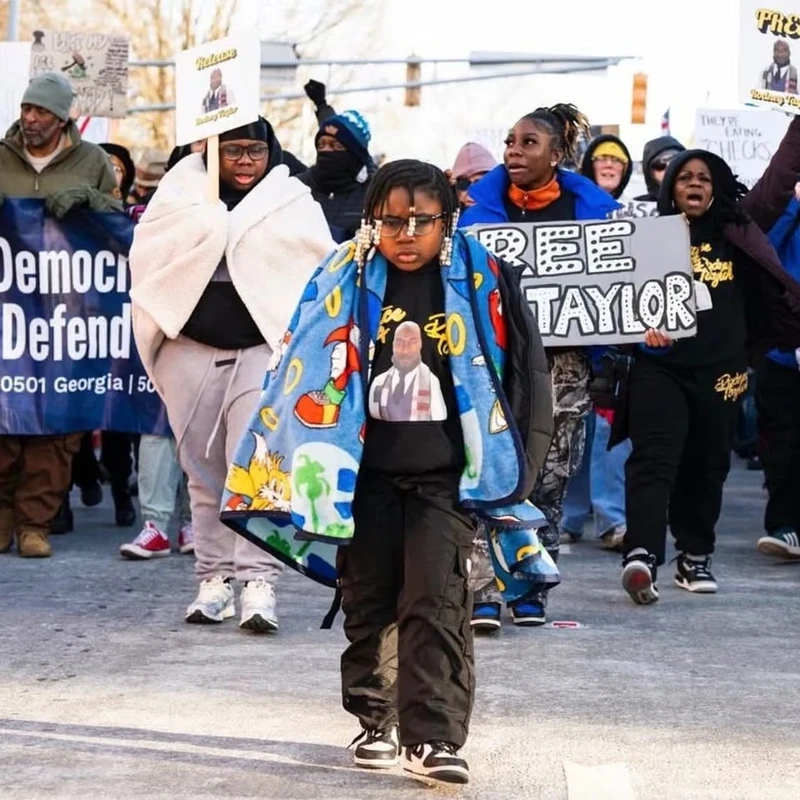
    Mildred Danis-Taylor is courageously advocating for her husband, Rodney Taylor, a double amputee who has been detained by Immigration and Customs Enforcement (ICE) since January 2025. Despite having received a pardon in 2010 for a teenage burglary conviction, Taylor remains in a Georgia detention center, and his wife is determined to secure his release.

    Confronting Conditions and Seeking Accountability

    The case gained significant attention when Mildred confronted Homeland Security Secretary Kristi Noem during a congressional hearing on March 4, 2026. Representative Lucy McBath brought Taylor’s experience to light, describing alleged unsafe and degrading conditions at the Stewart Detention Center, where Taylor reportedly had to navigate through unsanitary environments. Mildred, standing with her daughters, expressed her anger and desire for accountability, wanting Noem to directly acknowledge her plight.

    Rodney Taylor, 47, is a green-card applicant whose health has reportedly deteriorated in detention. His prosthetic legs have allegedly malfunctioned, exacerbating his challenging situation. His legal team has taken action by filing a habeas corpus petition and appealing an earlier deportation order.

    Broader Immigration Policy Concerns

    Taylor’s case has become a focal point in the larger debate surrounding immigration enforcement policies, particularly those expanded under President Donald Trump’s administration, which limited releases on bond. Advocacy groups and lawmakers are increasingly concerned about the oversight of detention facilities, especially for detainees with disabilities.

    Mildred Danis-Taylor, a former healthcare worker, has transformed into a dedicated activist. She has organized rallies, engaged with lawmakers, and made frequent visits to the detention center to support her husband. She described feeling a “fire inside” as she shifted into full-time advocacy, driven by her husband’s prolonged detention.

    ICE Response and Ongoing Struggle

    Immigration and Customs Enforcement (ICE) has denied the allegations of substandard conditions at the Stewart Detention Center, labeling claims as “false” and describing Taylor as “uncooperative,” though they provided no specific evidence. While Secretary Noem reportedly agreed to review Rodney Taylor’s case after the hearing, she was later fired, and no immediate resolution has been announced.

    Taylor’s detention continues as his legal proceedings advance, leaving his family in a state of uncertainty as they await a decision that will determine his future in the U.S. or potential deportation.

    What are your thoughts on Rodney Taylor’s detention and the conditions at ICE facilities? Share your views in the comments below!

  • USDA Cuts Land Grant, Starving Black Farmers

    The U.S. Department of Agriculture (USDA) has recently canceled the remaining funds from a $300 million grant program designed to help farmers, particularly those from underserved communities, purchase land and access resources. This decision, part of the Trump administration’s broader anti-Diversity, Equity, and Inclusion (DEI) initiatives, is being met with strong criticism, with advocates arguing it will further disadvantage Black farmers.

    A Program Aimed at Thriving, Now Canceled

    The program, known as the Increasing Land, Capital, and Market Access Program, was funded by the American Rescue Plan Act signed by President Joe Biden in March 2021. Its goal was to provide technical support and financial assistance to “underserved” producers, helping them transition from merely surviving to truly thriving. The USDA had championed these funds as a crucial lifeline for farmers struggling to acquire and maintain farmland.

    However, USDA officials have now sent cancellation letters to organizations that were approved for these grants. The Trump administration has labeled the program as providing “discriminatory preferences based on Diversity, Equity and Inclusion” and cited “wasteful spending.” This move effectively cuts off a vital resource for Black and Indigenous farmers who already face significant hurdles in accessing agricultural opportunities.

    Critics Decry ‘White-Only America’ Agenda

    John Boyd, president and founder of the National Black Farmers Association, expressed outrage over the decision. “They don’t want Black people to participate in these programs,” Boyd told TheGrio. “This is an administration that wants a white-only America.” He argues that these cuts are part of a deliberate effort to deprioritize Black and Brown farmers in favor of white farmers.

    Boyd highlighted the disparity in access, noting that white farmer groups like the Farm Bureau and the National Farmers Union have an “open door policy” with the USDA and the White House. His association, representing 116,000 Black farmers, often finds itself shut out of crucial meetings and dialogues, a situation Boyd described as “deplorable.”

    Historical Context and Ongoing Struggles

    The fight for equitable access to farmland for Black farmers has a long and difficult history. Despite promises like “40 acres and a mule” after the Civil War, Black land ownership peaked at 16 million acres in 1910 but has significantly declined since. Decades of racial discrimination within the USDA, coupled with legal setbacks and shifting political administrations, have left Black farmers struggling for adequate funding, leading to foreclosures and land loss.

    Boyd shared a personal anecdote about his grandfather paying three times the value for land, knowing he was being cheated but understanding that “land was everything.” For Black Americans, land ownership historically represented freedom, community standing, the ability to raise a family, and access to resources. Today, 190 pending farm foreclosures for Black-owned farmers underscore the ongoing financial precariousness many face due to inadequate support.

    Land was freedom. Land was your name in the community, and it gave you a chance to raise a family and produce healthy food…clean drinking water, timber to build houses. [My grandfather] said, ‘You can do any and everything if you had a little piece of land of your own.’ — John Boyd, President, National Black Farmers Association

    Boyd further criticized President Trump for meeting exclusively with white farmers in December 2025 when announcing a $12 billion bailout, stating, “There was not one Black farmer in the room. I mean [this is an] ‘open in your face, I’m a racist’ administration.”

    What are your thoughts on the USDA’s decision to cancel these grants? How can we ensure Black farmers have equitable access to land and resources? Share your perspectives in the comments below!

  • Is the U.S. Government Broke? A Deep Dive

    Could the United States government be on the verge of bankruptcy? A recent report based on the Treasury Department’s own consolidated financial statements for fiscal year 2025 paints a stark picture: the U.S. government is facing insolvency, struggling to meet its financial obligations and pay off its debts. This revelation comes at a time of increasing global instability and domestic financial pressures.

    A Troubling Financial Snapshot

    As of September 30, 2025, the U.S. reported a staggering $47.78 trillion in total liabilities against just $6.06 trillion in total assets. This massive imbalance means the government’s liabilities are nearly eight times the value of its reported assets. The situation is even more dire when considering unfunded obligations, such as Social Security and Medicare, which are listed separately on the Statement of Social Insurance (SOSI).

    Excluding these social insurance programs, the government’s consolidated balance sheet saw a deterioration of approximately $2.07 trillion between 2024 and 2025, reaching a negative $41.72 trillion. Key drivers of this increase in liabilities include a $2 trillion rise in federal debt and interest payable, along with a $438.8 billion increase in federal employee and veteran benefits payable.

    Making Sense of the Numbers

    The sheer scale of this debt can be difficult for the average American to comprehend. Fortune offered a relatable analogy: imagine a household earning $52,446 annually but spending $73,378. Such a household would be running a deficit of $20,932 per year and would be considered insolvent. Applied to the government, the total liabilities and unfunded promises equate to roughly $1.3 million per person against only $60,554 in assets, leaving a deficit of over $1.3 million.

    This financial precariousness is not going unnoticed on the global stage. With the Middle East conflict intensifying, Iran has reportedly threatened to target buyers of U.S. Treasury bonds, viewing them as legitimate targets that finance the U.S. military budget. This threat underscores how international actors perceive and potentially exploit America’s economic vulnerabilities.

    Potential Legislative Lifelines

    Amidst this challenging economic outlook, two legislative actions could offer a path toward fiscal recovery. The bipartisan H.R. 3289, the Fiscal Commission Act, sponsored by Representatives Bill Huizenga (R-MI) and Scott Peters (D-CA), aims to force a public discussion and confrontation with the necessary trade-offs and decisions required to restore fiscal health. This act would mandate a commission to address the nation’s financial challenges.

    Alternatively, Congress could consider calling for an Article V Convention, similar to actions taken by Switzerland, to propose a fiscal responsibility amendment to the U.S. Constitution. Sponsored by Representative Jodey Arrington (R-TX), such an amendment would enforce a balanced budget over the business cycle and prevent federal spending from outpacing the U.S. economy’s growth. These measures represent potential, albeit significant, steps toward addressing the nation’s profound debt crisis.

    What are your thoughts on the U.S. government’s financial situation? Do you believe these legislative actions could provide a solution? Share your views in the comments below!