
Category: Political and Economic News

  • Trump Tariffs: Businesses Eligible for $166 Billion Refund

    In a significant development for American businesses, the U.S. government has begun the process of refunding up to $166 billion in tariffs that were imposed under the Trump administration. This comes after a February ruling by the Supreme Court declared these sweeping tariffs unlawful.

    Applying for Tariff Refunds

    As of April 20, 2026, American importers can start applying for reimbursement through a new portal managed by U.S. Customs and Border Protection (CBP). The Consolidated Administration and Processing of Entries (CAPE) program is designed to streamline the refund process for International Emergency Economic Powers Act (IEEPA) duties, including interest.

    Refunds are anticipated within 60 to 90 days of approval, though CBP notes that the process might extend if further reviews are necessary. It’s important to note that only importers of record or their authorized brokers can apply, and not all payments are eligible in this initial phase. The timeline for full access remains uncertain.

    Consumer Frustration Amidst Refunds

    While businesses are set to receive substantial refunds, many American consumers are voicing their frustration online. They point out that the increased costs associated with these tariffs were often passed on to them, and they will not be receiving any direct reimbursement.

    Social media commentary highlights concerns that businesses profited from the higher prices and are now receiving large sums back, while consumers who bore the brunt of the cost receive nothing. Some users have even described it as a “wealth transfer” where taxpayers ultimately foot the bill for the refunds.

    Business Reactions and System Functionality

    Despite some consumer outcry, businesses are rushing to file claims. CEOs like Jay Foreman of Basic Fun have noted the system is functional but can be “a little glitchy,” requiring retries for uploads. Cassie Abel, CEO of Wild Rye, expressed relief that the portal is working, though she utilized her customs broker for the filing process.

    What are your thoughts on the tariff refund process? Do you think consumers should also receive compensation? Share your views in the comments below!
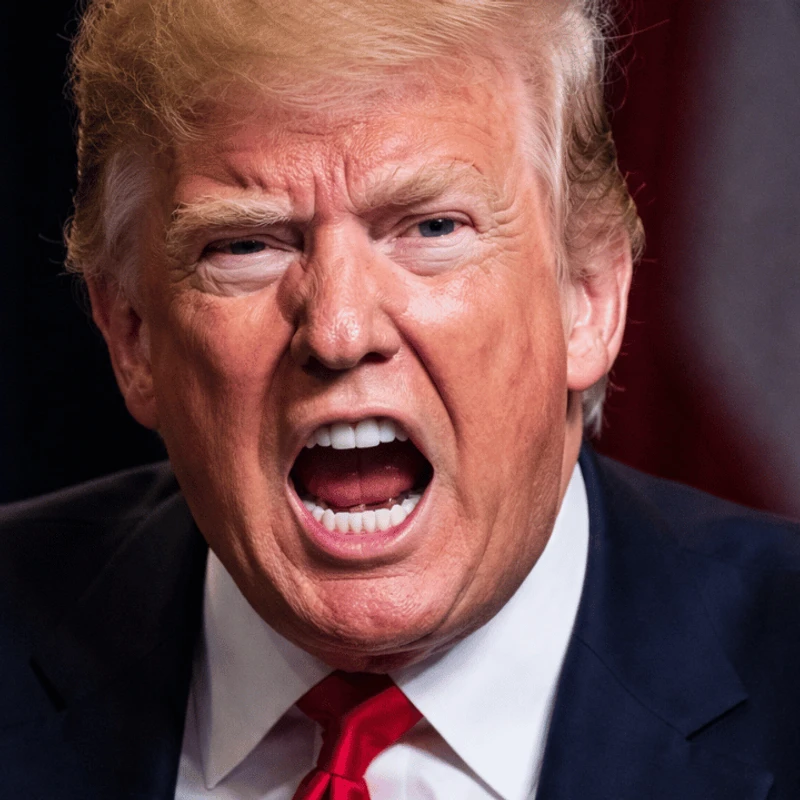
  • Supreme Court Forces Trump Admin to Refund $166B in Tariffs

    In a significant reversal of a key Trump administration economic policy, the Supreme Court has mandated the refund of $166 billion in tariff money. This massive repayment effort began on April 20th, not out of choice, but because the nation’s highest court declared the tariffs illegal.

    The Supreme Court’s February 2026 decision struck down the majority of tariffs imposed by the Trump administration, stating that the president lacked the constitutional authority to enact them via executive order using the International Emergency Economic Powers Act (IEEPA). This ruling paved the way for businesses that paid these tariffs to get their money back, with interest.

    A Sweeping Refund Effort

    Following the Supreme Court’s decision, Judge Richard K. Eaton of the U.S. Court of International Trade ordered the administration to refund all businesses that paid the illegal tariffs, regardless of whether they had filed lawsuits. This sweeping order led to the creation of the CAPE system (Consolidated Administration and Processing of Entries) to streamline the refund process.

    As of April 14th, nearly 56,500 importers had registered in the CAPE system, making them eligible for approximately $127 billion in refunds, including interest. The total amount owed across all importers is estimated at $166 billion. Customs officials anticipate that refunds will be processed within 60 to 90 days of approval, though the timeline for older, finalized payments remains unclear.

    Who Gets the Money Back?

    Here’s a crucial detail often overlooked: the refunds are going directly to the businesses that paid the tariffs – importers, corporations, and logistics companies. This means that everyday consumers who faced higher prices at retailers like Costco, Target, Walmart, and Amazon during the tariff era are not automatically receiving any compensation.

    While class-action lawsuits have been filed against some retailers, like Costco and EssilorLuxottica (parent company of Ray-Ban), in an effort to force them to pass refunds down to shoppers, these cases could take years to resolve. FedEx and UPS are notable exceptions, as they collected tariffs directly from consumers on international shipments and have stated they will return refunds once received from Customs.

    Administration Seeks to Reduce Payout

    Adding another layer to this complex situation, the administration is reportedly exploring ways to reduce the total payout. White House National Economic Council Director Kevin Hassett hinted on Fox News that “alternative authorities” might be used to lower the $166 billion figure, suggesting a search for legal workarounds.

    This delay and potential reduction in refunds add to the financial strain on small businesses. For instance, Brad Jackson, co-founder of After Action Cigars, paid $34,000 in tariffs last year, absorbing most of the cost himself. He expressed concern that a multi-month refund process wouldn’t solve the immediate cash flow issues the tariffs created.

    The narrative surrounding tariffs, initially promoted as a win where “China would pay” and government operations would be funded, has dramatically shifted. The Supreme Court declared the policy illegal, a judge ordered full refunds, and now the administration appears to be maneuvering to minimize its payout. While new duties are being imposed under different legal authorities, the $166 billion refund represents a significant, court-ordered reversal of a central Trump economic policy.

    What are your thoughts on the Supreme Court’s ruling and the refund process? Do you believe consumers who paid higher prices should receive compensation? Share your opinions in the comments below!

  • IRS Direct File Program Axed by Trump Admin

    Big news for taxpayers: the IRS Direct File program, a government-backed system designed to simplify tax filing, is officially being discontinued. The Trump administration has confirmed that the program will not be available for the 2026 tax season, a move that has already sparked considerable debate about its impact on everyday Americans.

    Direct File Program Comes to an End

    An official note sent to state comptrollers participating in the program announced that “IRS Direct File will not be available in Filing Season 2026.” While no future launch date has been set, the decision signals a significant shift in the IRS’s approach to tax preparation services. Treasury Secretary Scott Bessent stated that there are “better alternatives” and claimed the program wasn’t used extensively, suggesting the private sector could offer superior services.

    This decision marks a reversal from the program’s origins. Launched as a pilot in 2024, Direct File was developed using funds from the Inflation Reduction Act, signed into law in 2022 by the Biden administration. The goal was to provide a free, efficient, and easy-to-use option for taxpayers, a stark contrast to the often costly services offered by private tax preparation companies.

    Criticism and the Rise of a New Task Force

    Despite its user-acclaimed efficiency, the Direct File program faced criticism from some Republican lawmakers who argued it was a waste of taxpayer money, citing the existence of private free-filing options. However, proponents argue that these private options are often difficult to use and generate billions in profit for companies.

    The Trump administration, along with the Department of Government Efficiency led by Elon Musk, targeted the program early on. The “One Big Beautiful Bill Act” (OBBBA), signed in May 2025, includes a provision to establish a $15 million task force. This task force will explore enhancing public-private partnerships for free tax filing and assess the viability of replacing IRS-run direct e-file programs with private sector alternatives.

    Expert Reactions and Future Implications

    Industry experts aren’t surprised by the administration’s move. Adam Ruben, vice president at the Economic Security Project, commented that this administration often favors the wealthy, suggesting that “Trump’s billionaire friends get favors while honest, hardworking Americans will pay more to file their taxes.” The elimination of Direct File could mean increased costs for millions of taxpayers who relied on the free government service.

    • The IRS Direct File program will cease operations in Filing Season 2026.
    • The Trump administration cited “better alternatives” and claimed low usage.
    • The program was initially launched under the Biden administration as a free, efficient option.
    • Critics argued it was a waste of taxpayer money, while users praised its ease of use.
    • A new $15 million task force will explore private sector partnerships for tax filing.

    What are your thoughts on the discontinuation of the IRS Direct File program? Do you believe private sector options are truly better for taxpayers? Share your opinions in the comments below!

  • George Santos Freed After Trump Commutes Sentence

    Well, this is a turn of events! George Santos, the former Republican congressman who made headlines for a string of fabricated stories, is now a free man. His prison sentence has been commuted by former President Donald Trump, leading to a significant shift in his legal situation.

    From Conviction to Commutation

    You might remember that Santos was sentenced to 87 months in federal prison back in July 2023. The charges stemmed from misleading donors, stealing campaign funds, and lying to Congress. He initially pleaded not guilty but later admitted to wire fraud and aggravated identity theft, also being ordered to pay over $374,000 in restitution.

    However, in a surprising move, President Trump decided to commute Santos’ sentence. This means Santos is now released from prison, though the exact terms and remaining obligations are still being clarified. It’s a dramatic turn for a politician whose career was built on a foundation of falsehoods.

    Santos’s Reaction and Trump’s Reasoning

    Santos himself took to social media to express his gratitude, calling it a “true second chance at life.” He acknowledged his imperfections but thanked God for never abandoning him. This marks a significant moment for the former congressman as he navigates his post-prison life.

    Trump, on his Truth Social platform, defended his decision by labeling Santos a “rogue” but suggesting he shouldn’t have served such a lengthy prison term. He then drew a parallel to Democratic Senator Richard Blumenthal, accusing Blumenthal of being a “COMPLETE AND TOTAL FRAUD” for allegedly misrepresenting his military service during the Vietnam War, despite receiving draft deferments himself.

    Implications and Public Debate

    The commutation of George Santos’ sentence is likely to spark considerable debate. It raises questions about fairness, the justice system, and the influence of political figures. While Santos gets a chance to rebuild his life, the implications of this decision are far-reaching.

    What are your thoughts on George Santos’ sentence being commuted? Do you agree with Trump’s reasoning? Share your views in the comments below!

  • Housing Market: Stable Prices, Incentives, More Homes

    Thinking about buying a new home? The latest insights from homebuilders suggest that the market might be offering a bit of a breather. While interest rates have seen some fluctuations, prices are holding steady, builders are still providing incentives, and more homes are expected to hit the market soon.

    Interest Rates and Incentives Aren’t Moving the Needle

    In September, mortgage rates saw a slight dip, getting close to 6% before rising again. However, this small change didn’t significantly boost buyer traffic or demand, according to builders surveyed by NewHomeSource’s parent company, Zonda. Many builders are still offering attractive incentives, like mortgage rate buydowns that can lower a buyer’s rate by over a full percentage point.

    Despite these efforts, economic uncertainty and job stability concerns are keeping many potential buyers hesitant. It seems that even favorable rates and builder discounts aren’t enough to convince everyone to jump off the sidelines just yet.

    Stable Prices and Flat Construction Costs

    Good news for buyers concerned about rising costs: tariffs haven’t significantly impacted material costs or home prices yet. Builders reported that the overall cost of building a home has remained relatively stable. This stability means prices aren’t currently being driven up by material expenses, and many builders are even cutting prices to attract buyers.

    However, it’s wise to keep an eye on tariffs, as they could potentially influence construction costs and home prices down the line, possibly in 2026. For now, the stability is a welcome sign for the market.

    More Homes on the Horizon

    Looking ahead, while single-family housing starts might finish 2025 lower than in 2024, nearly half of the surveyed builders plan to increase their housing starts in 2026. This projected rise is largely attributed to an increase in “community count” – the number of communities with five or more homes for sale. This trend has been growing for nine consecutive months and is expected to continue.

    For those interested in production home markets, this could translate into more options becoming available in the next 8 to 12 months. It suggests a potentially more robust inventory for buyers in the near future.

    Are you looking to buy a new home? How do stable prices and builder incentives influence your decision? Share your thoughts in the comments below!

  • EU’s New EES System May Cause Airport Delays

    Planning a trip to Europe soon? You might want to add a little extra buffer time to your travel plans. The European Union has rolled out a new system called the Entry/Exit System (EES), and it could mean longer queues at some of your favorite European airports.

    What is the EU’s Entry/Exit System (EES)?

    The EES officially began its rollout on October 12th. This new system applies to travelers from non-EU countries who are visiting the 29 participating European nations for short stays. It requires visitors to provide biometric data, such as fingerprints and facial scans, along with their entry and exit dates and places.

    The goal is to streamline border control and enhance security. However, the implementation process might lead to some initial hiccups, especially at airports that handle a high volume of passengers.

    Airports to Watch For Potential Delays

    Reports suggest that several airports could experience increased congestion due to the EES. Travelers heading to or from these hubs might want to plan accordingly:

    • Paris Charles de Gaulle Airport (France)
    • Faro International Airport (Portugal)
    • Palma de Mallorca Airport (Spain)
    • Heraklion International Airport in Crete (Greece)
    • Milan Malpensa Airport (Italy) – particularly early afternoon arrivals
    • Airports serving Frankfurt (Germany)
    • Airports serving Amsterdam (Netherlands)

    Early morning arrivals seem to be particularly susceptible to congestion at some of these locations. The EES is expected to be fully implemented across the EU by April 2026.

    Tips for Navigating the New System

    Julia Lo Bue-Said, CEO of Advantage Travel Partnership, advises travelers to give themselves ample time. “Make sure, where possible, you’re leaving yourself between three and four hours from the point of entry,” she told the BBC. This extra time can help mitigate frustration if bottlenecks occur.

    While the EES aims to improve travel efficiency in the long run, the initial rollout phase might require a bit more patience from travelers. Being prepared and allowing extra time can make a big difference in ensuring a smoother journey.

    Are you planning a trip to Europe soon? How are you preparing for the new EU Entry/Exit System? Share your tips and thoughts in the comments below!

  • Trump Vows More Government Stakes After Intel Deal

    President Donald Trump is signaling a significant shift in economic policy, promising more government stakes in key industries following the landmark $8.9 billion deal with semiconductor giant Intel. This partnership, which grants the federal government a 10% ownership stake in Intel, is being positioned as the cornerstone of a new strategy to establish America’s first major sovereign wealth fund.

    A New Era of Government-Industry Partnerships

    The Intel agreement, which provides substantial funding through the CHIPS Act alongside the government’s equity stake, represents a departure from traditional American economic policy. White House economic advisor Kevin Hassett explained that while the government will hold equity positions, there are no plans for interference in corporate operations. This hands-off approach aims to balance public investment goals with private sector autonomy, allowing taxpayers to benefit from potential stock appreciation.

    Trump defended the deal on his Truth Social platform, dismissing critics and highlighting its potential benefits for both taxpayers and the company. He views this partnership as a template for future collaborations across various economic sectors. The strategy draws inspiration from successful international models, such as Norway’s substantial sovereign wealth fund, aiming to generate long-term returns for the nation.

    Balancing Public Investment and Private Autonomy

    The Intel partnership carefully balances national security interests, particularly concerning semiconductor supply chains, with the administration’s goal of creating new revenue streams. Industry analysts suggest this model not only boosts America’s technological competitiveness but also offers potential financial gains for the government. This dual benefit makes the approach attractive for policymakers looking for innovative economic development strategies.

    Hassett pointed to historical precedents, such as the government’s equity stakes in Fannie Mae and Freddie Mac after the 2008 financial crisis, to illustrate that government ownership of shares, while unusual, is not entirely unprecedented. However, the Intel deal marks a more proactive strategy, investing in a healthy company rather than intervening in a crisis.

    Market Reactions and Future Potential

    Early market responses to the Intel deal have been largely positive, with Intel’s stock showing gains following the announcement. This favorable reaction suggests investors see the partnership as beneficial, potentially encouraging other companies in strategic sectors to explore similar government collaborations. Positive market sentiment indicates confidence in Intel’s future and the strategic advantage of government backing in the competitive semiconductor industry.

    As the administration looks to expand its sovereign wealth fund strategy, companies in sectors like AI, clean energy, and defense may also find government partnerships appealing. The success of the Intel model could be crucial in garnering political support and private sector interest for future deals. The key challenge will be structuring these partnerships to benefit both public and private interests while maintaining corporate autonomy and addressing concerns about government involvement in the free market.

    What are your thoughts on the government taking stakes in private companies? Share your perspective in the comments below!

  • DC Police Command Confusion: Two ‘Chief Pams’

    In Washington D.C., a new layer of leadership has been added to the police department, but it’s causing quite a bit of confusion. President Trump announced a federal takeover of the D.C. police force to combat violent crime, placing Attorney General Pam Bondi in charge. The catch? The city already has its own police chief, Pamela Smith, who reports directly to Mayor Muriel Bowser.

    Who’s Really in Charge?

    While federal and D.C. officials are publicly stating they’re working together, the core issue remains: who has the final say? This unusual setup raises significant questions about decision-making regarding police resources, personnel, and policy. What happens if the two Pams disagree?

    D.C. leaders maintain that while the Attorney General can request services from the mayor, the chain of command and the department’s funding structure haven’t changed. When directly asked about her reporting structure post-takeover, Chief Smith was clear: ‘I answer to Mayor Muriel Bowser.’

    Conflicting Signals from the White House

    However, the White House presented a different perspective. Press Secretary Karoline Leavitt suggested a clear hierarchy: the President, then the Attorney General, followed by DEA Administrator Terry Cole (appointed as interim federal administrator) as the head of the Metropolitan Police Department. This directly contradicts Chief Smith’s statement.

    Cole is reportedly working with Smith to ensure officers can perform their duties. Yet, the Justice Department has remained tight-lipped about whether the Trump administration believes it has the authority to dictate D.C. personnel decisions or if any new orders have been issued to the police force.

    Understanding the Legal Framework

    The law does permit the President to take control of the D.C. police for up to 30 days. The White House has hinted this period could be extended, but any extension beyond 30 days would require congressional approval – a challenging feat given potential Democratic opposition.

    In the meantime, hundreds of federal officers from various agencies have been conducting overnight patrols in the city. While Cole described the cooperation with Chief Smith as ‘tremendous,’ the fundamental question of who holds ultimate authority remains unanswered, creating an uncertain environment for D.C.’s law enforcement.

    What are your thoughts on this dual command situation in D.C.? Share your opinions in the comments below!