Category: Music and Politics Intersection

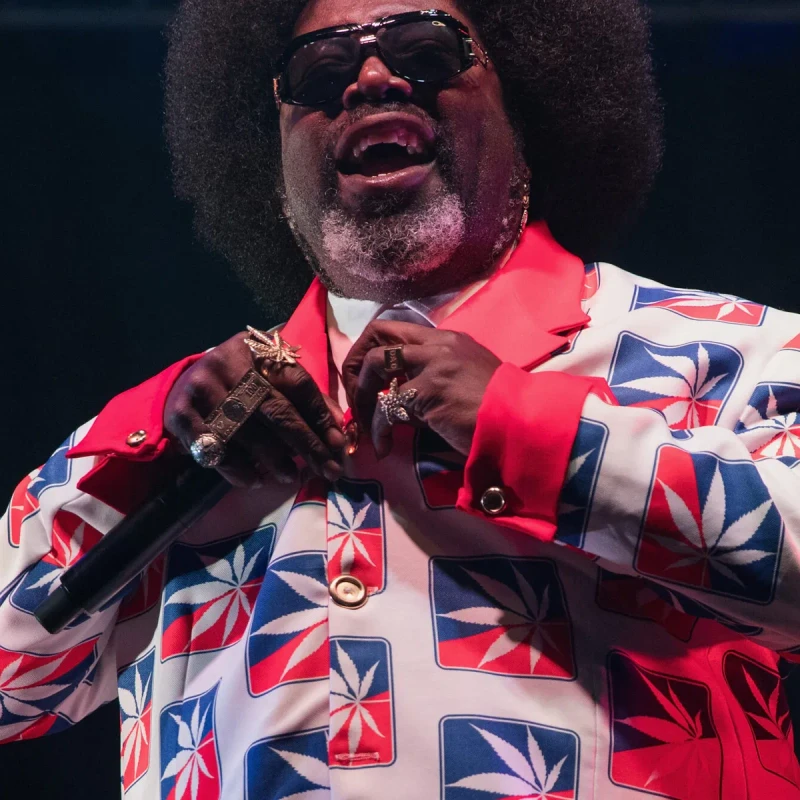
  • Afroman Wins Case: Where Are Free Speech Advocates for Hip-Hop?

    Free speech is a fundamental right, but lately, it feels more like a privilege that’s selectively applied. Afroman recently proved that it shouldn’t be weaponized, but it begs the question: where are the staunch free speech defenders when hip-hop finds itself on trial?

    The Afroman Case: Turning Adversity into Art

    You’ve probably seen the viral clips from the defamation case brought against Afroman by seven Adams County, Ohio, sheriff’s deputies. Following a 2022 raid on his home, which yielded no evidence of the alleged drug trafficking and kidnapping, Afroman decided to turn lemons into lemonade—or in this case, a raid into a hit song.

    He ingeniously used footage from the raid, including a deputy eyeing his mother’s lemon pound cake, to create satirical music videos, social media content, and merchandise. The trial itself became a spectacle, with deputies on the stand making questionable claims, like one admitting he wasn’t sure if Afroman had sex with his wife. Afroman even brought a deputy’s ex-wife as a defense witness, adding to the drama.

    A Symbol of Free Expression

    Afroman’s courtroom attire—an American flag-patterned suit—felt particularly fitting. After the trial, he celebrated with supporters, expressing his love for America and for free speech, a right those very deputies are sworn to protect. The deputies’ lawsuit, however, seemed to mirror tactics seen elsewhere, even within hip-hop itself.

    Consider Drake’s attempt to sue UMG over Kendrick Lamar’s diss track. While both artists engaged in public back-and-forth, only one seemed to be seeking legal recourse for perceived humiliation. This trend of artists weaponizing defamation claims when public opinion doesn’t favor them is concerning, especially since a successful case could set a dangerous precedent for hip-hop.

    Hip-Hop Under Scrutiny

    It’s ironic that artists like Drake have previously supported petitions to protect Black art and restrict the use of rap lyrics in court. Hip-hop, and Black music in general, has a long history of being scrutinized and surveilled by the system. From the FBI monitoring Nina Simone for her activism to viewing Wu-Tang Clan as a criminal organization, this surveillance has rarely been about public safety; it’s been about controlling narratives.

    This pattern has intensified, with lyrics increasingly being presented as evidence in court. Cases like Young Thug’s RICO trial, where prosecutors dissected his music, and Lil Durk’s potential trial, where his lyrics could be scrutinized, highlight this alarming trend. While high-profile artists receive industry support, the fight against criminalizing artistic expression is crucial, as it can have life-altering consequences.

    The Fight for Artistic Freedom

    The urgency is palpable, especially in cases like that of James Broadnax, a Texas man facing the death penalty where prosecutors used misrepresented lyrics as evidence. High-profile support from artists like Travis Scott, Young Thug, and Killer Mike has been vital in seeking a stay of execution. Without such support, cases like Broadnax’s could easily be ignored.

    Afroman’s case is compelling because it showcases how the legal system can be used to suppress free expression, sometimes even within the genre itself. The deputies who sued him clearly felt they were above the law, only to face public humiliation in a nationally televised loss. For many, this felt like a cathartic moment, a small victory against the constant villainization of art.

    The question of who truly benefits from free speech protections remains open. However, it’s clear that hip-hop is currently at the forefront of the battle to preserve it. The selective outrage from some ‘free speech warriors’ highlights the need for consistent advocacy for all forms of artistic expression.

    What are your thoughts on the Afroman case and the broader issue of free speech in hip-hop? Share your perspective in the comments below!
  • Jack Harlow’s ‘Monica’: More Than Just Music?

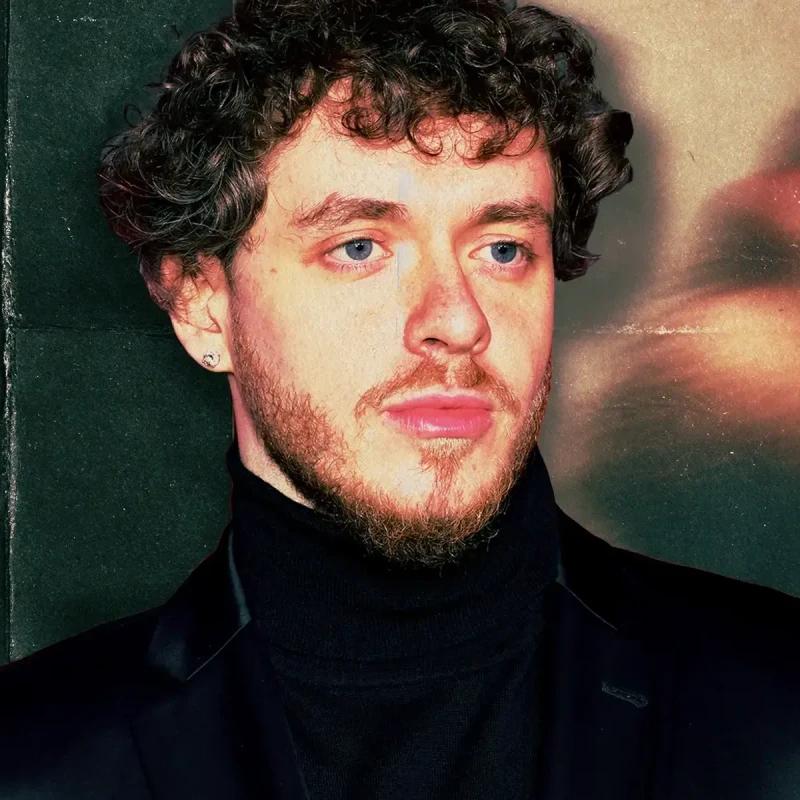
    Jack Harlow’s new album, ‘Monica,’ released on March 13th, has stirred up more than just opinions on its sound. While the shift towards a softer, R&B-leaning, or Neo-Soul-adjacent vibe would have been enough to get people talking, it was Harlow’s own words that ignited a full-blown backlash cycle.

    The ‘Got Blacker’ Controversy

    In a Popcast interview, Harlow contrasted his move towards R&B and Soul with white rappers venturing into Country or Pop-Punk. He stated that making ‘Monica’ meant he ‘got Blacker,’ adding, ‘I love Black music,’ and describing the album’s sound as ‘soft, intimate, melodic music.’ This statement landed poorly, framing Blackness as an aesthetic choice a white artist could adopt.

    The immediate backlash wasn’t necessarily about Harlow singing over Soul production, but rather the familiar framing of his comments. Online discussions quickly focused on how ‘Monica’ seemed to borrow heavily from late-1990s and early-2000s Black music and culture, particularly the Soulquarians era. Critics and listeners alike mocked both the album’s style and Harlow’s controversial quote.

    Proximity vs. Ownership: The Problem with ‘Getting Blacker’

    Harlow’s career has been built within Black cultural spaces, relying on proximity to Hip Hop, collaborations with Black artists, and a visual language that often places him alongside Black peers. While this isn’t unusual in Hip Hop, which has always embraced artists from diverse backgrounds, Harlow’s phrasing carried historical weight.

    Blackness in America has been policed, commodified, and repackaged, often by industries profiting from Black art while distancing themselves from Black people. Harlow’s suggestion that exploring R&B and Soul aesthetics brought him closer to Blackness flattened a rich cultural lineage into mere aesthetics. It implied that immersion equals access, a notion that felt presumptuous to many listeners.

    The ‘Monica’ Title and Its Interpretations

    Adding to the scrutiny, the album’s title, ‘Monica,’ also raised eyebrows. Harlow stated he’s ‘always loved’ the name, potentially referencing the legendary R&B singer. However, many listeners interpreted it differently, questioning if it played too closely to the Black vernacular phrase ‘my n*gga,’ which is historically off-limits to non-Black individuals.

    While Harlow hasn’t confirmed this intent, the interpretation spread due to the surrounding context. When listeners feel an artist is too comfortable in a culture not their own, smaller details can become loaded. This lack of trust means that what might seem harmless on the surface can feel problematic.

    Borrowing from a Legacy

    ‘Monica’ heavily draws from the textures of the Neo-Soul era, a period known for introspective Black music from artists like Erykah Badu, D’Angelo, and Lauryn Hill. However, the term ‘Neo-Soul’ itself is complicated, often seen as an industry-imposed label that limited artists who simply saw themselves as continuing the tradition of Soul music.

    The music from that era was deeply rooted in Black life and often created in culturally significant spaces. Borrowing from this sound without meaningfully connecting to its lineage or acknowledging the artists who shaped it can feel detached. The album recreates the surface of that era, but without the lived context that gave it resonance.

    Assumptions Over Admiration

    Ultimately, ‘Monica’ exposed a disconnect between Harlow and the audience that helped build his career. The issue wasn’t just one comment; it was a combination of choices: pivoting to R&B/Soul, naming the album ‘Monica,’ framing the process as ‘getting Blacker,’ and doing so without a clear connection to the artists who defined that sound and culture.

    Moving into R&B isn’t the problem—artists evolve. But when that evolution is presented without understanding the culture it draws from, it feels less like growth and more like assumption. The reaction stems from the sense that Jack Harlow mistook access for ownership and familiarity for belonging.

    What are your thoughts on Jack Harlow’s ‘Monica’ album and the surrounding controversy? Share your opinions in the comments below!

  • Kamala Harris & Nicki Minaj Fans Clash Over Misinformation

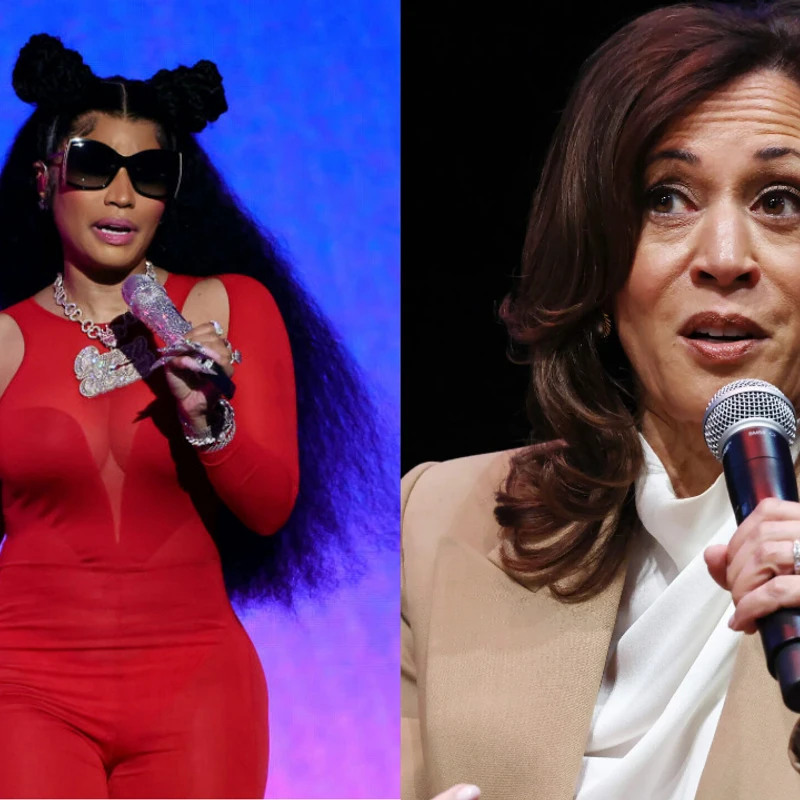
    It seems like Vice President Kamala Harris has found herself in the middle of a familiar internet firestorm, where politics, celebrity, and passionate fan bases collide. This time, it’s the devoted fans of rapper Nicki Minaj, known as the Barbz, who are firing back.

    A Broad Statement Sparks a Specific Reaction

    During a recent appearance on the “Now You Know with Knowa De Baraso” podcast, Harris was discussing the pervasive issue of misinformation. While speaking broadly about how people share inaccurate claims, sometimes unintentionally, her comments were perceived by some as a veiled reference to Nicki Minaj.

    Harris stated, “I think there are many people who are doing it intentionally, and I think there are others who are doing it unintentionally.” She emphasized the need for accountability and education when tackling this widespread problem.

    The Barbz Mobilize

    When specifically asked about Minaj and her alignment with certain political narratives, Harris chose not to directly attack the artist. Instead, she made a broader point about the importance of shared facts, using the analogy, “making sure we’re on the same page about the fact that two plus two will always equal four.”

    However, this measured approach didn’t prevent Minaj’s loyal fans from interpreting the comments as a personal slight. Across social media, the Barbz quickly rallied, accusing Harris of being condescending and out of touch. Some defended Minaj’s intelligence and authenticity, while others criticized Harris’s communication style and political history.

    Celebrity Influence in the Political Arena

    This incident underscores the significant influence and reactivity of online fan communities, especially when their favorite celebrities get drawn into political discussions. Nicki Minaj has, in recent years, increasingly aligned herself with right-wing talking points, drawing criticism for amplifying narratives that are often disputed.

    Her political commentary frequently blurs the lines between personal opinion and widely contested claims. This places her at the center of ongoing debates about how celebrity influence shapes public discourse and shapes perceptions, particularly during pivotal election cycles.

    Looking Ahead: Politics and Pop Culture

    Meanwhile, Vice President Harris appears focused on her broader mission to combat misinformation and foster fact-based conversations, especially with another election cycle on the horizon. She also clarified that a run for governor of California is not in her immediate plans, stating, “It’s not my calling.” As for a potential 2028 presidential bid, she remained noncommittal, focusing on the upcoming 2026 midterms.

    This moment perfectly illustrates a significant cultural shift: entertainers are no longer just observers of politics; they are active participants. Their audiences often rival, and sometimes surpass, traditional political platforms. When these worlds inevitably overlap, the response is often more than just political – it becomes deeply personal and passionately digital.

    What do you think about the intersection of celebrity, politics, and misinformation? Share your thoughts in the comments below!