Category: Legal and Social Justice Issues

  • Timothy Brown Sues NYPD for $100M After Alleged Assault

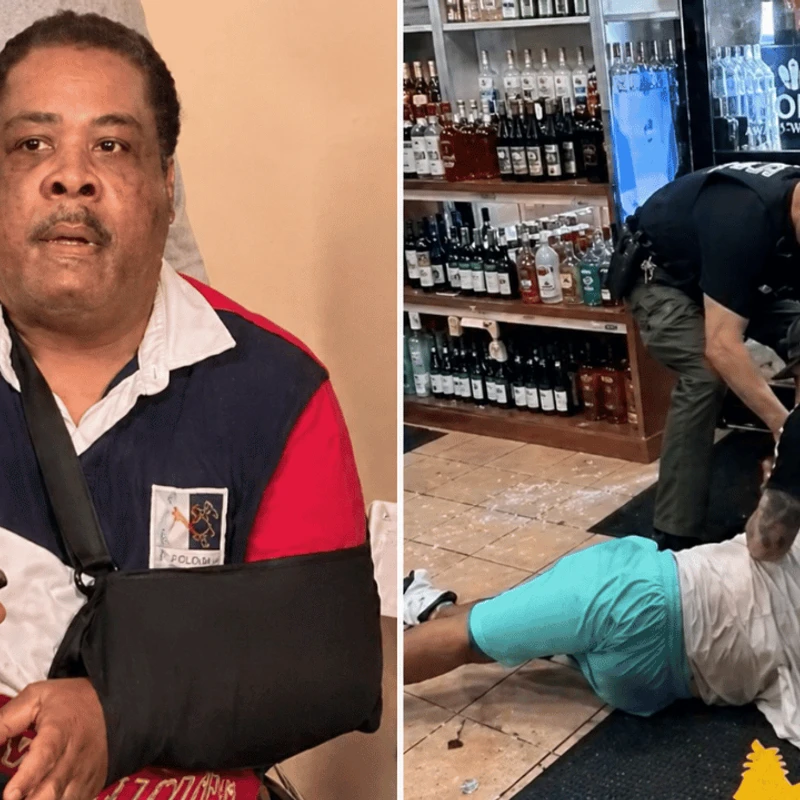
    What started as a simple stop at a Brooklyn liquor store has escalated into a massive legal battle. Timothy Brown, who was captured on viral video being violently arrested by two NYPD detectives, is now planning to sue the city for a staggering $100 million. This lawsuit stems from an incident on April 14th that Brown says has left him with lasting physical and emotional scars.

    A Routine Stop Gone Terribly Wrong

    Brown, who works as both a home health aide and a security guard, had just finished his workday and stopped to buy some wine. Suddenly, plainclothes officers approached him. According to the legal notice filed, the detectives allegedly attacked him right in front of shocked customers, initiating a terrifying ordeal.

    Appearing at a press conference with a cane, an arm brace, and a visible limp, Brown shared the profound impact of the encounter. He described feeling “humiliated, disrespected and embarrassed,” stating, “What happened to me should not happen to anyone else. It was wrong and it was disgusting. My life will never be the same.”

    Mistaken Identity and Excessive Force Allegations

    The police department later admitted that Brown was not the suspect they were looking for. Detectives reportedly believed he matched the clothing description of an individual involved in a crack cocaine purchase. Despite finding no drugs or contraband on Brown, he was still issued summonses for resisting arrest and obstruction – charges that have since been dismissed by the Brooklyn District Attorney’s Office.

    Brown vehemently denies the police claims of resisting. “I never resisted arrest not at all,” he stated. “There was nothing I could do, I was being beating and battered.”

    The Details of the Legal Claim

    The legal notice details serious allegations against the detectives, identified as Volkan Maden and Michael Algerio. It claims they failed to properly identify themselves and used excessive force for approximately eight minutes. Brown alleges he was slammed into a glass display, dragged through shattered bottles, and sustained significant injuries, including head trauma, facial injuries, lacerations, bruising, and leg injuries.

    The detectives involved are currently under internal investigation. NYPD Commissioner Jessica Tisch has described the footage as “upsetting,” though city leaders and police union officials have offered differing perspectives on the broader implications of the incident.

    What are your thoughts on Timothy Brown’s lawsuit against the NYPD? Share your perspective in the comments below.


  • DOJ Revives Firing Squad Executions Amid Shifting Death Penalty Views

    In a move that’s reigniting debate around capital punishment, the U.S. Department of Justice (DOJ) is exploring the possibility of bringing back firing squads as a method for federal executions. This consideration comes at a time when public opinion on the death penalty appears to be shifting, with support declining over the past two decades.

    DOJ’s Push for Expanded Execution Methods

    According to a recent memo from Acting Attorney General Todd Blanche, dated April 24th, the DOJ aims to “strengthen” the federal death penalty. The plan involves not only reinstating lethal injection protocols used during former President Donald Trump’s administration but also exploring additional execution methods, including the firing squad. The memo explicitly states the intention to “expand the protocol to include additional manners of execution, such as the firing squad, and streamlining internal processes to expedite death penalty cases.”

    Blanche has criticized the Biden-Harris administration, alleging a failure “in its duty to protect the American people by refusing to pursue and carry out the ultimate punishment against the most dangerous criminals.” This contrasts with former President Joe Biden’s actions, which included placing a moratorium on several federal executions and reversing efforts to expand the death penalty.

    Public Opinion and Controversial Methods

    The push for firing squads comes as overall support for the death penalty has fallen to 52%, with even lower numbers among younger generations like millennials (47%) and Gen Z (42%). Furthermore, the idea of firing squads is met with significant controversy. Many Americans view it as a violent and gruesome method, with one individual quoted by the University of Richmond’s Corinna Lain stating, “Well, that’s what murderers do.”

    Lain, an expert on law, describes the firing squad as “bloody,” “violent,” and “grotesque.” She labels it a form of “dehumanization” and “explicit brutality.” Currently, this method is only legal in five states: South Carolina, Idaho, Mississippi, Oklahoma, and Utah. Lain also argues that resources allocated to death penalty cases could be better utilized, suggesting that converting death sentences to life without parole would save millions of dollars.

    High-Profile Cases on Death Row

    The Death Penalty Information Center reports that nearly 2,100 prisoners are currently on death row nationwide. Among them are individuals whose crimes have garnered significant public attention, such as Robert Bowers, responsible for the deadliest antisemitic attack in U.S. history at Pittsburgh’s Tree of Life synagogue in 2018, and Dylann Roof, who murdered nine members of Mother Emanuel AME Church in Charleston, South Carolina.

    What are your thoughts on the DOJ’s proposal to bring back firing squads for federal executions? Share your views in the comments below.

  • Mother of Karoline Leavitt’s Nephew Detained by ICE

    A routine school pick-up took a dramatic turn this week when Bruna Ferreira, the mother of White House press secretary Karoline Leavitt’s nephew, was detained by U.S. immigration agents in Revere, Massachusetts. The incident has ignited a firestorm of controversy surrounding immigration policies and enforcement.

    The Detention Incident

    Ferreira, 33, who emigrated from Brazil as a child and has lived in the Boston area for years, was reportedly on her way to pick up her 11-year-old son, Michael Leavitt Jr., when ICE agents “suddenly swarmed” her car. Her sister, Graziela Dos Santos Rodrigues, recounted that agents demanded Ferreira’s identification, which she did not have with her at the moment.

    The swiftness of the encounter left Ferreira’s family stunned. The incident underscores the aggressive tactics employed in recent immigration enforcement actions.

    Connections to the White House

    The situation involves Michael Leavitt Jr., the son Ferreira shares with Michael Leavitt, who is the brother of Karoline Leavitt. A White House source, seeking to distance the administration from the incident, stated that Ferreira is the mother of Karoline’s nephew and that they have not spoken in many years. The source also noted that the child has lived full-time in New Hampshire with his father since birth and has never resided with his mother.

    ICE’s Stance and Legal Challenges

    Homeland Security confirmed the arrest, with a spokesperson identifying Bruna Caroline Ferreira as a “criminal illegal alien from Brazil” with a prior arrest for battery. They stated she entered the U.S. on a B2 tourist visa and was required to depart by June 1999. She is currently being held at the South Louisiana ICE Processing Center and is facing removal proceedings. The administration reiterated its policy: “Under President Trump and Secretary Noem, all individuals unlawfully present in the United States are subject to deportation.”

    However, Ferreira’s attorney, Todd Pomerleau, vehemently disputes the DHS’s claims. He stated in an interview that Bruna has “no criminal record whatsoever” and demanded proof of the alleged battery charge. Pomerleau’s defense challenges the narrative presented by immigration authorities.

    Broader Immigration Crackdown

    Ferreira’s detention occurs amidst a significant crackdown on immigration under the Trump administration, which has seen a dramatic increase in arrests and deportations. New policies, including expedited removals and expanded enforcement partnerships, have led to a surge in arrests, even among individuals without criminal histories. Critics argue that this approach has become a “full-scale dragnet,” uprooting lives and communities across the country, rather than focusing solely on “criminal aliens.”

    What are your thoughts on Bruna Ferreira’s detention and the current immigration policies? Do you believe the enforcement is fair and targeted? Share your views in the comments below!

  • Grand Jury Investigates Celeste Rivas’ Death

    It’s been over two months since the tragic discovery of 14-year-old Celeste Rivas’ body in the trunk of an impounded Tesla registered to singer D4vd. Now, the investigation is reaching a new stage, as an investigative grand jury has reportedly heard evidence related to her mysterious death, according to the Los Angeles Times.

    Grand Jury Takes Up the Case

    A source confirmed to the outlet that the grand jury convened earlier this month. While it remains unclear if all evidence has been presented, this development marks a significant step in the ongoing probe. The family of Celeste Rivas continues to seek answers and demand justice for the young teen.

    This update comes shortly after authorities confirmed that D4vd is now considered a suspect in the case. The exact nature of his relationship with Rivas is still unclear, adding another layer of mystery to the investigation. Furthermore, police have identified a second suspect, though their identity has not yet been revealed to the public.

    Unanswered Questions and Slow Progress

    The investigation has faced scrutiny for its pace. TMZ’s Harvey Levin previously reported that an arrest was “nowhere imminent,” and that authorities were uncertain if the death was even a homicide. The lack of definitive answers regarding the medical examiner’s findings and toxicology reports has fueled public concern, especially given the time elapsed since Rivas’ body was discovered.

    The circumstances surrounding Rivas’ death, including how her body ended up in D4vd’s vehicle and the potential involvement of multiple suspects, continue to be a focus for investigators. The grand jury’s involvement suggests a move towards potentially bringing charges, but the path forward remains uncertain.

    What are your thoughts on the ongoing investigation into Celeste Rivas’ death? Do you believe the grand jury will bring clarity to this case? Share your thoughts in the comments below!

  • Marc Lamont Hill Calls Brian McKnight an “Asshole”

    Things got heated on “The Joe Budden Podcast” when social justice activist and professor Marc Lamont Hill addressed comments made by singer Brian McKnight. McKnight had recently stated on another podcast that he could “destroy” Hill, labeling him a “pseudointellectual.” Hill, in turn, didn’t hold back, calling McKnight an “asshole” and providing a detailed explanation for his strong words.

    Hill’s Reasoning for the “Asshole” Label

    Hill clarified that his assessment wasn’t based on a personal beef but on his experiences interviewing McKnight multiple times. He recounted instances where McKnight allegedly treated his crew and team with rudeness and nastiness. Hill emphasized that true character is revealed not just in how one treats the host, but in how they interact with everyone around them.

    Further fueling his opinion, Hill recalled an alleged incident where McKnight reportedly rejected a fan asking for an autograph at an airport. While acknowledging that he doesn’t personally know McKnight or his family, Hill pointed out that McKnight himself has made his family matters public. He specifically referenced McKnight’s controversial 2024 Instagram video where he labeled his own children as “evil” and “negativity” that needed to be removed to live a better life.

    A Public Figure’s Responsibility

    Hill’s critique highlights a broader point about public figures and their interactions. He suggests that when individuals, especially those in the public eye, air their family grievances publicly, it can indeed reflect poorly on their character. The exchange underscores the scrutiny that public figures face and the importance of maintaining respectful conduct, both professionally and personally.

    What do you think about Marc Lamont Hill’s comments on Brian McKnight? Do you agree with his assessment based on the interactions he described? Let us know your thoughts in the comments!

  • Santa Monica Settles Land Seizure Case with Black Family

    In a significant move towards acknowledging past wrongs, the city of Santa Monica has agreed to a $350,000 settlement with the descendants of Silas White, a Black entrepreneur whose dreams of opening a Black beach club were shattered when his land was unjustly seized in the 1950s. This decision marks a crucial step in addressing historical racial injustices within the city.

    A Dream Thwarted by Systemic Racism

    Silas White had leased a prime property on Ocean Avenue with the ambitious plan to establish the Ebony Beach Club, an exclusive hotel and beach club intended for Black patrons during a time of segregation. Advertised to open on October 15, 1958, his vision was abruptly halted when the city claimed the land was needed for the construction of the nearby Santa Monica Civic Auditorium. Using eminent domain, the city seized the property, effectively ending White’s entrepreneurial endeavor.

    The settlement, unanimously approved by the Santa Monica City Council on November 18, 2025, follows a month of mediation and resolves a claim filed by White’s family. Mayor Pro Tempore Caroline Torosis acknowledged the city’s role in perpetuating racial injustice, stating, “The city of Santa Monica took a series of actions to deprive Black Americans of the opportunity of being in Santa Monica. Our history books show that systemic racism, oppression, and discrimination happened.”

    Reparations and Meaningful Repair

    Torosis emphasized that the settlement, despite the city’s current financial challenges, is a deliberate act of providing meaningful reparations. “We as a council made a decision that despite the fact we’re facing a very challenging financial time, we want to dedicate funding because [a formal apology to the Black community] is great, but unless it comes with money and meaningful repair, it’s just an empty word,” she stated.

    Constance White, a descendant of Silas White, shared her motivation in a 2024 Instagram video, stating, “I’m not doing this because of money. I’m doing this because of justice and for the future of all people. It’s not only my case. As you research, there are thousands of people who have had this happen to them.” Her words highlight the broader implications of this case for countless others affected by similar injustices.

    Honoring Silas White’s Legacy

    Beyond the financial settlement, the city plans to honor Silas White’s legacy in tangible ways. A section of Vicente Terrace, a public street adjacent to the upscale Viceroy Hotel (part of which was once leased by White), will be renamed Silas White Street. Additionally, an exhibit dedicated to White will be established at the city’s Main Library, with his family contributing materials. Silas White Day will also be officially observed on October 12th.

    What are your thoughts on Santa Monica’s settlement with the White family? Do you believe this is a significant step towards reparations? Share your views in the comments below!