Category: Justice and Accountability

  • Ex-Officer Indicted After Choking Student

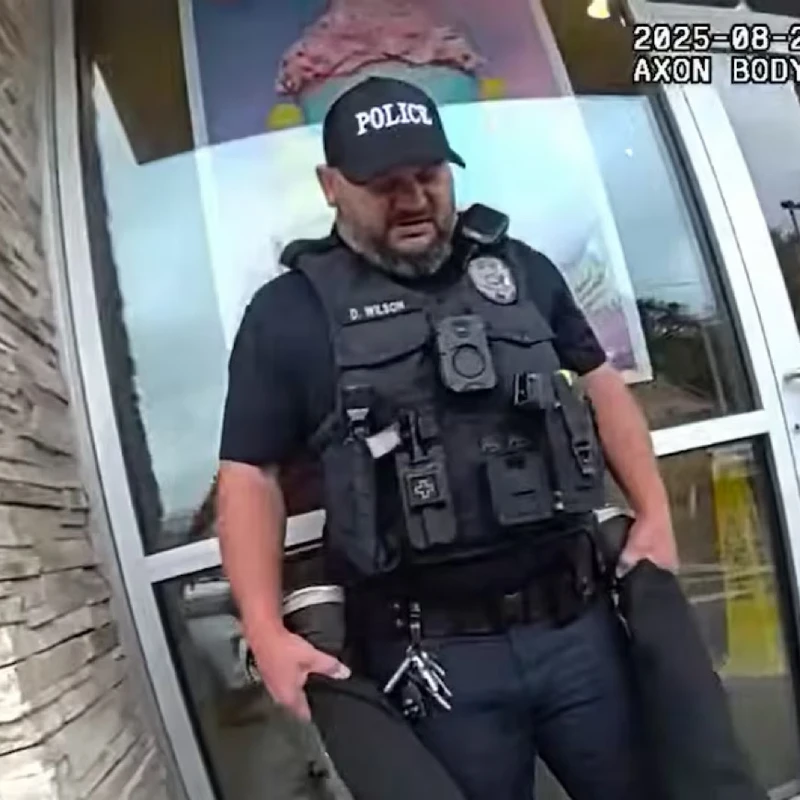
    A disturbing incident involving a former Texas police officer has taken a significant turn. Daniel Wilson, formerly with the Wichita Falls Police Department, has been indicted following a violent encounter with Victoria Lang, a Black autistic college student. The incident, captured on body camera, has ignited widespread outrage and renewed calls for police reform.

    The McDonald’s Encounter

    The events unfolded in 2025 when Lang, then 19, arrived in Wichita Falls to start college. Facing an issue with her dorm availability, she sought to use a McDonald’s restroom to freshen up. However, a misunderstanding by a McDonald’s manager, who reportedly mistook her for being homeless, led to a 911 call.

    When officers arrived, body camera footage released on May 6th shows Lang inside the restroom. Reports indicate that when asked for her name and birth date, Lang declined to provide the information. The interaction quickly escalated, with officers, including Wilson, reportedly using aggressive tactics.

    Excessive Force and Public Outcry

    The released footage left many viewers stunned, questioning the officers’ response. Critics argued that the situation was escalated unnecessarily and that Lang appeared confused rather than dangerous. The incident has struck a particular nerve within Black communities, highlighting concerns about how routine encounters with law enforcement can become physically confrontational. Furthermore, the situation brings attention to the need for specialized de-escalation approaches when interacting with individuals with autism.

    Investigators later determined that Wilson used “inappropriate force, carry methods, and body positioning,” describing his actions as “excessive.” This assessment was a key factor leading to his indictment and previous termination from the police department.

    Accountability and Reforms

    In the wake of the public backlash and scrutiny, an internal investigation was launched. This led to Daniel Wilson’s termination from the Wichita Falls Police Department. Another officer involved in the incident, Douglas Gulley, reportedly resigned. City leaders faced significant pressure from activists and residents demanding transparency and accountability.

    In response, local officials acknowledged the severity of the incident and committed to enhancing officer training. These improvements are set to include expanded de-escalation techniques, crisis response education, and revised arrest procedures. The push for transparency, particularly the public release of the body camera footage, was crucial in fueling the demand for these changes.

    Cases like Victoria Lang’s continue to fuel critical conversations about race, mental health awareness, and law enforcement accountability. The hope is that increased transparency and improved training will lead to more compassionate and effective interactions between police and vulnerable individuals in the future.

    What are your thoughts on this indictment and the ongoing calls for police reform? Share your perspective in the comments below!
  • Young Dolph Killer Sentenced: 20 Years for $500 Hit

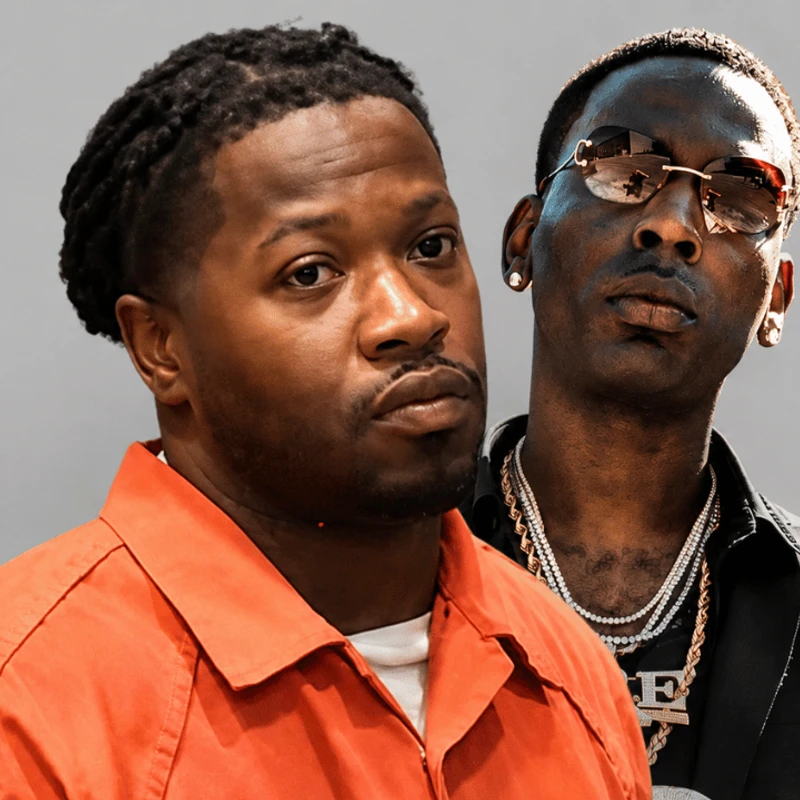
    It’s been nearly four and a half years since the shocking daylight murder of Memphis rapper Young Dolph, but the final chapter of this tragic case has finally closed. On May 15, 2026, Cornelius Smith, the last remaining defendant, received his sentence in a Shelby County courtroom. This marks a significant moment, bringing a sense of resolution to a case that deeply impacted the music community and beyond.

    A Plea Deal and a Reduced Sentence

    Smith, 36, accepted a plea deal that saw his charge reduced from first-degree to second-degree murder. As a result, he was sentenced to 20 years in prison. Prosecutors highlighted Smith’s cooperation as a crucial factor in reaching this outcome, acknowledging his role in providing information that helped move the case forward.

    This plea deal wasn’t a simple, quick resolution. Both the prosecution and defense teams indicated in February that an agreement was near, but ironing out the specific details, particularly concerning Smith’s housing within the Department of Corrections, took additional time. Concerns about his safety, specifically whether he would be placed in solitary confinement for protection, also played a role in the delay, especially since Smith had been housed out of state after testifying against another defendant.

    The Path to Sentencing and Previous Convictions

    The shooting occurred on November 17, 2021, at Makeda’s Homemade Butter Cookies, tragically ending the life of Adolph Thornton Jr., known globally as Young Dolph. During a previous court proceeding, when the shooting video was presented, Smith identified himself as the first gunman and confirmed that Justin Johnson was the second shooter. He later expressed regret, stating, ‘I didn’t even know Dolph. I felt stupid. I knew I messed up.’

    Justin Johnson was previously convicted of first-degree murder, conspiracy to commit first-degree murder, and being a convicted felon in possession of a handgun. He received a life sentence for his role. A third individual, Hernandez Govan, accused of orchestrating the murder, was acquitted by a jury last summer.

    A Statement from the District Attorney

    Shelby County District Attorney Steve Mulroy released a statement following the sentencing, emphasizing the gravity of the crime and the path to resolution. ‘Young Dolph was a beloved member of this community, his death a tragedy, his murder an outrage,’ Mulroy stated. ‘We’re glad to finally have this last part of the case resolved.’

    The sentence properly reflects the gravity of the offense while giving due consideration to the cooperation this defendant provided. We hope this resolution can give Dolph’s family some sense of closure. — Steve Mulroy, Shelby County District Attorney

    The DA’s statement underscores the community’s desire for justice and closure for Young Dolph’s family. While the legal proceedings have concluded for Smith, the impact of his actions and the loss of Young Dolph continue to resonate.

    What are your thoughts on this sentencing and the resolution of the Young Dolph murder case? Share your perspective in the comments below!

  • Ex-Cop Sean Grayson Convicted in Massey Killing

    A jury has spoken: former Illinois deputy Sean Grayson has been convicted of second-degree murder in the tragic shooting death of Sonya Massey. This conviction on Wednesday, October 29th, brings a measure of justice, but it also shines a harsh light on Grayson’s past. Long before he pulled the trigger, his record was marred by a lengthy disciplinary history, raising serious questions about how he remained in law enforcement.

    A Troubled Past, Yet Hired Repeatedly

    Astonishingly, despite numerous red flags, Grayson managed to be hired by six different Illinois law enforcement agencies within a four-year span. This pattern of hiring raises concerns about the vetting processes in place. It highlights a system that seemingly overlooked significant issues, allowing a troubled officer to continue serving.

    One notable incident occurred in 2022 when Grayson received a reprimand for striking a deer with his patrol vehicle. What’s particularly alarming is that this happened while he was traveling at approximately 110 mph, despite his boss having called off a high-speed chase. He later dismissed the crash as a “dumb mistake.”

    Official misconduct will land you in jail… I’m calling you on your integrity. It will get you sued. And it will get you out of your business of law enforcement very quickly in today’s world. — Nate Miller, Logan County Sheriff’s Office chief deputy

    These words from Logan County Sheriff’s Office chief deputy Nate Miller underscore the seriousness of Grayson’s actions. Following this incident, Grayson resigned from the Logan County Sheriff’s Office in April 2023. Just a month later, he joined the Sangamon County Sheriff’s Office, where he would tragically kill Sonya Massey 13 months later. The sheriff who hired him subsequently retired early in the wake of the shooting.

    DUI Convictions and Military Discharge

    Grayson’s issues weren’t limited to his law enforcement career. Before entering the police force, he was discharged from the Army due to two drunken driving convictions. The first occurred in August 2015, followed by a second in July 2016. These DUIs resulted in a general discharge under honorable conditions.

    Testimony and Key Evidence

    During his trial, Grayson testified in his own defense. He claimed he believed Massey was going to throw a pot of scalding hot water at him and that her words, “I rebuke you in the name of Jesus,” constituted a threat. He stated he raised his weapon as an act of force in response.

    However, bodycam footage from his then-fellow officer, Dawson Farley, became crucial evidence. Farley testified that he did not perceive Massey as a threat and, in his original report, admitted to fearing for his safety due to the hot water. While Farley wasn’t charged as he didn’t fire his weapon, his testimony contrasted with Grayson’s account.

    After the shooting, Grayson’s chilling words to Farley were recorded: “She done. You can go get it, but that’s a head shot. There’s nothing you can do, man.” When Farley offered to help Massey, Grayson dismissively threw his medical kit on the floor, stating, “I’m not even gonna waste my med stuff then,” after Farley indicated his assistance wasn’t needed.

    Sentencing and Future Implications

    Grayson faces up to 20 years in prison or probation for his second-degree murder conviction. The jury’s decision not to convict him on first-degree murder charges, which carry a sentence of 45 years to life, reflects the complexities presented during the trial. His sentencing is scheduled for January 29, 2026.

    In the aftermath of this case, Massey’s family received a $10 million settlement with the state. Furthermore, Illinois has enacted a new law aimed at increasing transparency regarding the background checks of candidates applying for law enforcement positions. This tragic event and its fallout are driving significant changes in how police candidates are scrutinized.

    What are your thoughts on Sean Grayson’s disciplinary record and the conviction? Share your perspective in the comments below.