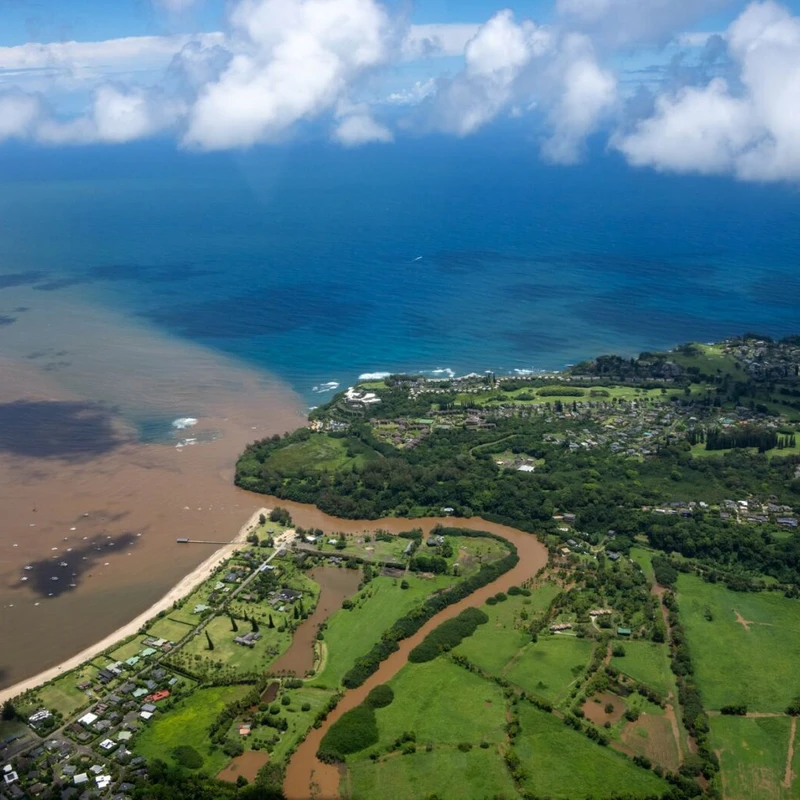
If you’re planning a trip to Hawaii or live there, listen up! Health officials have issued brown water advisories for popular beaches on Oahu and Maui following recent severe storms. This warning is crucial for anyone considering a dip in the ocean, as the heavy rainfall has washed significant contaminants into the nearshore waters.
What is a Brown Water Advisory?
A brown water advisory isn’t a beach closure, but it’s a serious public health warning. It signifies that stormwater runoff has carried pollutants from various sources – like overflowing cesspools, septic systems, farms, and roadways – into the ocean. This runoff can contain harmful substances such as sewage, chemicals, animal waste, debris, and even disease-causing organisms.
The advisory comes after Hawaii experienced some of its worst flooding in over two decades, particularly impacting Oahu’s North Shore and parts of Maui. Thousands were evacuated on Oahu, and flood concerns were high across both islands. Health officials are urging everyone to check current advisories and steer clear of any water that appears brown or murky after rainfall.
Health Risks and Precautions
The Hawaii Department of Health advises against swimming, surfing, wading, or drinking water from streams and ponds after significant rain events. For Oahu residents, the City and County of Honolulu recommended staying out of ocean waters for at least 72 hours after the last rainfall, and continuing to avoid murky areas. They also warned of potential floating debris that might not be visible from the shore.
Extra caution is especially advised near stream mouths, drainage outlets, and anywhere runoff visibly enters the ocean. While there are no blanket beach closures, officials stress the importance of making informed decisions and prioritizing safety.
Environmental Monitoring Confirms Risks
To reinforce the need for caution, state officials conducted environmental monitoring. Samples collected from Oahu’s North Shore beaches revealed that several locations exceeded the state’s beach action value for enterococci, a bacteria that indicates potential fecal contamination and swimmer illness risk. Further testing in impacted areas detected pathogens like E. coli, Enterococcus, and Salmonella in some samples.
Officials remind the public that testing provides a snapshot in time, and the best practice remains to avoid any water that looks discolored, particularly after storms. The advisories for Maui and Oahu are being updated regularly through the Clean Water Branch’s advisory system.
Have you ever encountered a brown water advisory during your travels? What precautions do you take after heavy rainfall in coastal areas? Share your experiences and tips in the comments below!