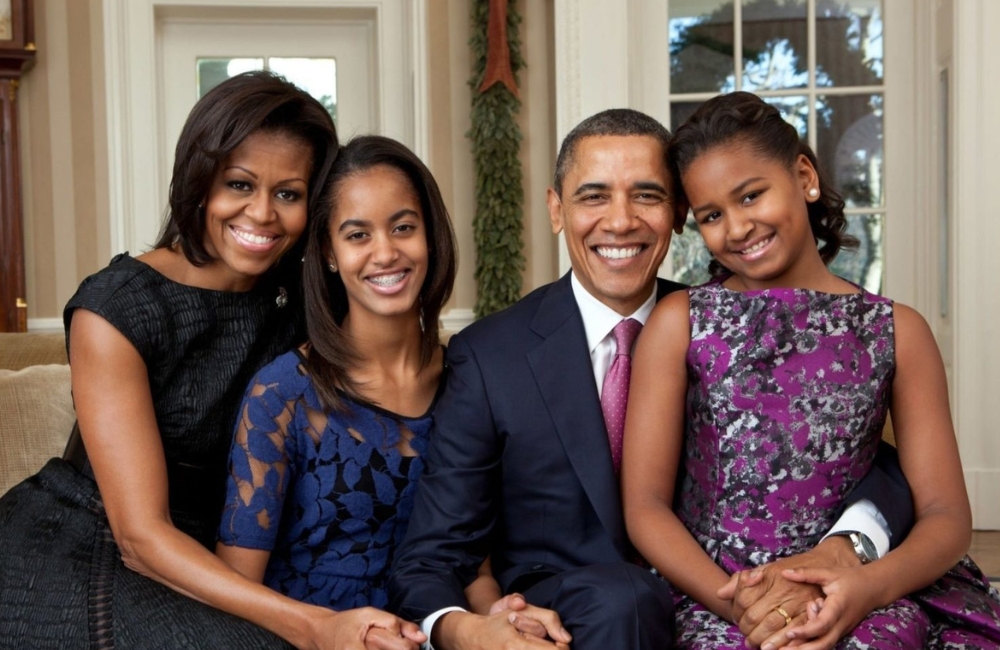
Former First Lady Michelle Obama has always been open about her experiences with motherhood, and her recent reflections on raising daughters Malia and Sasha offer a candid look at the unique parenting struggles she and Barack Obama navigated. These insights reveal the delicate balance required to foster individual growth in children while under intense public scrutiny.
The Challenge of Different Personalities
Raising Malia, now 27, and Sasha, 24, presented the Obamas with the ultimate parenting challenge: adapting to two very different personalities. Michelle Obama described the need to abandon any one-size-fits-all approach, as each daughter required a distinct parenting style. This adaptive strategy was crucial, especially given the unprecedented public attention on their family life during their time in the White House.
Sasha, the younger daughter, particularly tested traditional parenting methods with her fierce independence and reluctance to conform. Her interactions with her father, Barack, required him to learn that she wouldn’t always engage in expected parent-child ways. In contrast, Malia’s naturally curious and engaging personality allowed for a different dynamic, fostering connections through intellectual discussions and shared interests.
Adapting Strategies in the Public Eye
Obama’s description of needing to be “chameleons” highlights a fundamental truth about modern parenting: the necessity of flexibility and adaptation. The traditional, rigid parenting structures have evolved, making way for more nuanced approaches that cater to each child’s individual emotional and social needs. This adaptability was particularly vital during their White House years, where normal childhood development unfolded under extraordinary public scrutiny.
The pressure to maintain a perfect family image while allowing their daughters to develop authentic personalities created an added layer of complexity that most parents don’t encounter. Despite persistent public speculation about their marriage, the Obamas’ approach reveals a partnership built on mutual respect for their children’s autonomy, learning to work with, rather than against, their distinct temperaments.
Lessons for Contemporary Families
Michelle Obama’s willingness to share these personal struggles offers validation for parents facing similar challenges, especially those with children who don’t fit conventional molds. Her insights arrive at a time when parenting philosophies are rapidly evolving, moving towards more collaborative methods that prioritize understanding over strict control. The Obama family’s journey underscores that successful parenting involves growing alongside one’s children, adapting methods to foster stronger family bonds and more confident individuals.
What parenting strategies have you found most effective when raising children with different personalities? Share your experiences and insights in the comments below!