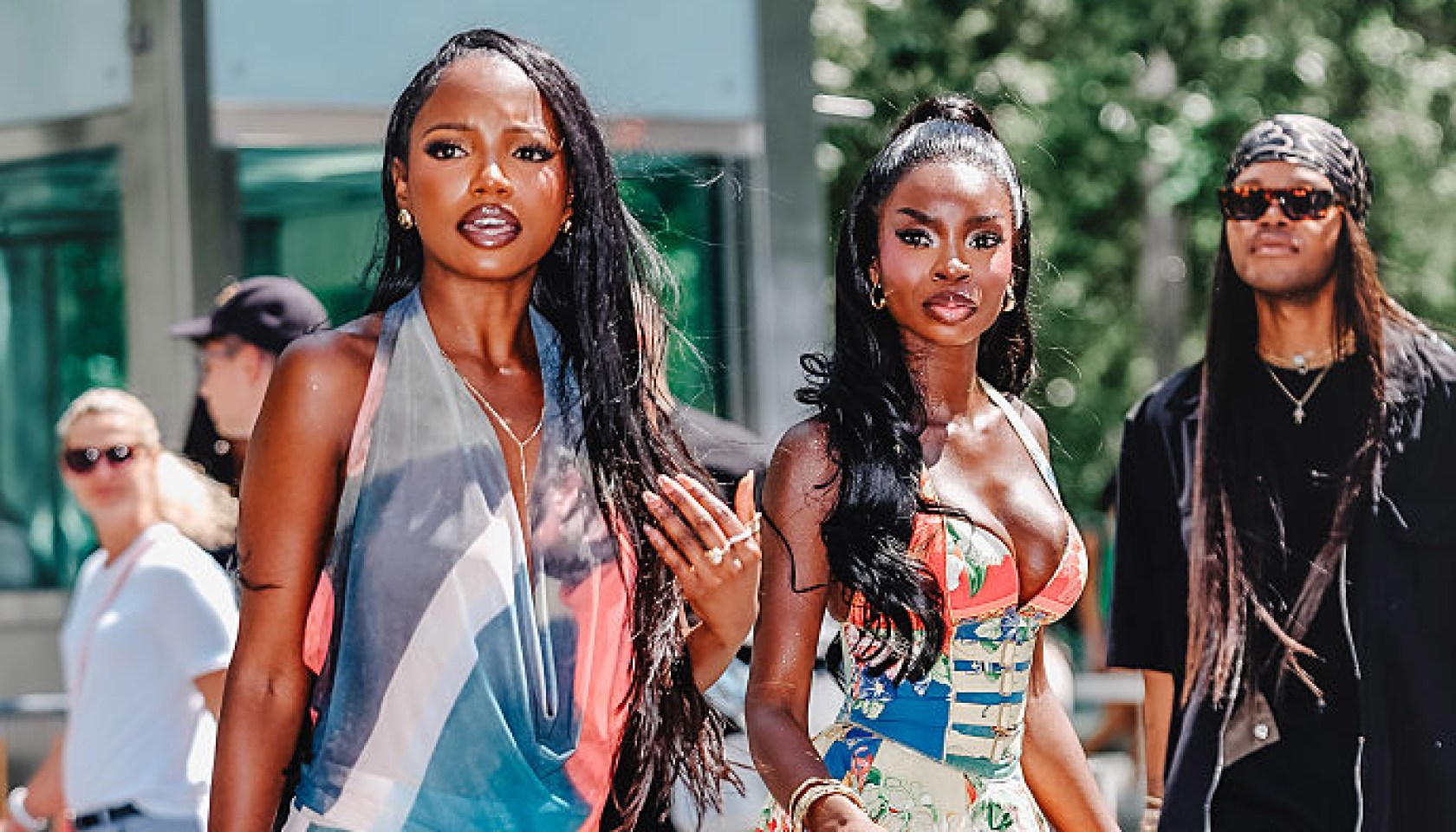
Season 7 of Peacock’s “Love Island USA” delivered some of the most talked-about TV moments, placing its Islanders at the center of pop culture conversations. Among the breakout stars, Chelley Bissainthe and Olandria Carthen navigated the fame and the harsh online backlash often directed at Black women in reality television. The best friends recently spoke with Teen Vogue about their journey in the villa and the enduring strength of their friendship.
Addressing Unfair ‘Mean Girl’ Labels
Following their time in the villa and ahead of the Love Island reunion, Chelley and Olandria shared their shock and disappointment regarding the online backlash they received. They were unfairly labeled “mean girls” after holding controversial cast member Huda Mustafa accountable for her actions. “It was confusing and so weird because we knew who we were in that villa,” Chelley told Teen Vogue. “We know how much we showed up for every single person on that island… So for us to come out of the villa and see that we’re mean girls, we’re like, ‘Mean girls where?’”
Chelley expressed frustration at the double standard, questioning why they faced criticism for speaking their truth and holding others accountable, while similar behavior from others went unaddressed. “How dare you guys say something like that to us, but not to everyone who was having that mean girl energy or mean girl moments? It goes back to the whole, you have to act a certain type of way [as a Black woman] because the moment you act ‘out of character’ you’re done,” she explained. They emphasized that their actions were about accountability, not name-calling or aggression.
Navigating Stereotypes and Finding Support
Olandria added that the unfair narrative was exacerbated by fellow Islanders who, after leaving the villa, further fueled the bullying accusations. “To see our fellow Islanders playing into that narrative was hard,” Chelley recalled. “It’s like, you knew us, why would you get out and let America, let social media get to your head?”
Olandria highlighted the pressure Black women face to constantly manage their emotions in the public eye. “They use a moment of weakness and make that one specific time our whole character. I knew that when it came to my emotions, I had to dial that back… The moment that I did break and I kind of blew, people were like, ‘I knew it. That’s the real her.’ I wanted to be unapologetically me, but it’s like this world doesn’t allow Black women to do that.”
A Friendship Meant to Be
Luckily, they had each other for support. Both Chelley and Olandria had been approached for the show in previous seasons but felt that being cast together in Season 7 was fate. “We’re soul sisters for a reason,” Olandria told Teen Vogue. “We’ll always say to one another, ‘God knew we needed each other.’ I’m so happy the past seasons did not work out for us because season 7 was the year to be here at the same time.”
Their bond was immediate, with many favorite moments revolving around their hair. Both opted for braids to manage the Fiji heat and the show’s challenges. “I think one of the biggest things for us is when we both walked out, got into the villa, and looked at each other and we’re like, ‘Oh, we both got braids,’” Chelley recalled. Olandria added, “On our off days, Chelley and I would be on the floor crocheting my hair, looping my braids through [to freshen them up]. We didn’t have anyone there to braid our hair.”
This shared experience over hair, something deeply understood within the Black community, was a key factor in solidifying their friendship. “That was just a moment of like, ‘Yo, you’re my girl. You know you’re stuck with me, right? You’re not going anywhere,’” Chelley said, with Olandria adding, “My girl—we are in it for the long haul.”
What are your thoughts on the pressures faced by Black women in reality TV? How important is sisterhood and mutual support? Share your opinions in the comments below!