Category: Drakes Music and Controversies

  • 6ix9ine: God’s Punishment for Drake & Lil Durk?

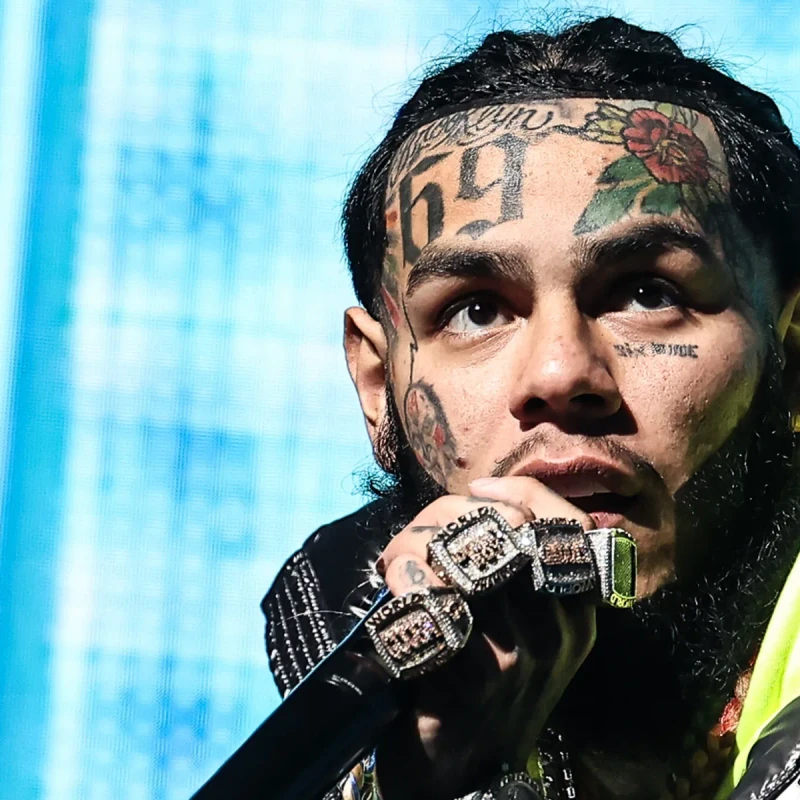
    Controversial rapper 6ix9ine is weighing in on the recent troubles faced by fellow artists Drake and Lil Durk, and he has a rather divine explanation. In a recent interview with VladTV, 6ix9ine suggested that the legal and public backlash surrounding the two rappers is a form of divine punishment for dissing him on their 2020 track, ‘Laugh Now Cry Later.’

    A Divine Perspective on Hip-Hop Beef

    6ix9ine, no stranger to public criticism and legal battles himself, believes that God has shown him his power through the struggles of Drake and Lil Durk. He expressed surprise at the level of backlash Drake has faced, noting his perceived popularity and mixed heritage, which he thought would shield him from widespread criticism.

    The rapper pointed to several instances, including jokes about Drake being urinated on and Kendrick Lamar’s pointed mention during the Super Bowl halftime show, as signs of Drake’s declining public image. 6ix9ine sees these events, coupled with Lil Durk’s arrest, as evidence of a larger plan.

    Lil Durk’s Legal Woes and 6ix9ine’s Interpretation

    Lil Durk is currently in jail without bond, facing charges in connection with a murder-for-hire plot that dates back to 2022. His trial is anticipated to begin in August 2026. 6ix9ine questioned what anyone facing such serious charges, with friends potentially cooperating, would be feeling, implying it’s far from a happy situation.

    He even referenced a Bible verse about correcting those who try to humiliate you, further cementing his belief that Drake and Lil Durk’s current predicaments are a direct consequence of their past actions towards him. It’s a bold claim, linking personal grievances to spiritual retribution.

    The ‘Laugh Now Cry Later’ Connection

    The specific song 6ix9ine references, ‘Laugh Now Cry Later,’ released in 2020, featured both Drake and Lil Durk and included lines that 6ix9ine interpreted as disses. He feels that the subsequent troubles faced by both artists are a form of cosmic payback for those lyrics.

    Whether you agree with 6ix9ine’s interpretation or not, his comments certainly add another layer to the ongoing narratives surrounding these prominent figures in the hip-hop world. It’s a reminder of how intertwined public perception, legal issues, and even spiritual beliefs can be in the music industry.

    What do you think about 6ix9ine’s theory? Do you believe Drake and Lil Durk are facing divine punishment? Share your thoughts in the comments below!
  • Drake: Critic-Proof in the Streaming Era?

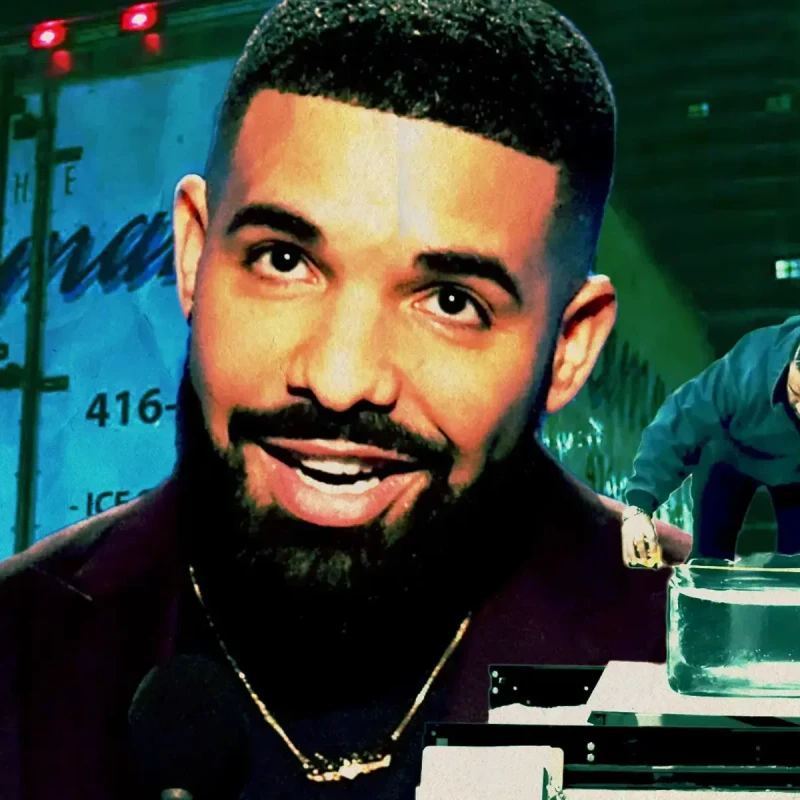
    Drake just dropped a triple-album, and while the music itself is sparking conversations, the real buzz is about something else entirely: the backlash. Despite harsh critiques calling his new projects ‘bloated,’ ‘repetitive,’ and ’emotionally exhausted,’ the numbers are, as usual, enormous. It begs the question: has Drake reached a point where criticism simply doesn’t touch his chart dominance anymore?

    Brutal Reviews, Bigger Numbers

    The reviews for ‘ICEMAN,’ ‘Habibti,’ and ‘Maid of Honour’ have been less than stellar. Critics pointed to weak lyricism, particularly bars seemingly crafted for social media captions rather than deep reflection, and production that felt minimal, even lazy. The sheer volume of music—over 40 songs—also drew fire, with many questioning why Drake would release so much if only a fraction felt essential. Some even speculated this was a strategy to flood streaming platforms before fulfilling contractual obligations.

    Yet, despite the critical panning, the albums immediately dominated streaming services. Drake’s music once again took over playlists, timelines, and online discourse. While fans celebrated it as another ‘takeover,’ critics saw it as proof that Drake prioritizes quantity over cohesive artistic statements. Regardless of the label, everyone was talking about it, and more importantly, everyone was listening.

    Mastering the Streaming Era

    In a previous era, releasing over 40 songs at once would have been unthinkable. Now, it’s a calculated streaming strategy. This is precisely what makes Drake so hard to evaluate traditionally. While critics approach his albums as tightly edited artistic statements, Drake seems more focused on occupying as much digital space as possible. These projects are designed to hit different audiences simultaneously.

    ‘ICEMAN’ leans into competitive rap, filled with shots at rivals. ‘Habibti’ explores melodic, atmospheric R&B, a space Drake has refined over years. ‘Maid of Honour’ ventures into club and house-inspired sounds, territory he’s revisited since ‘Honestly, Nevermind.’ Individually, listeners might gravitate towards one, but together, they create a constant stream of engagement. Streaming culture rewards abundance, and Drake understands this better than almost anyone—he helped shape this environment.

    Beyond Album Reviews: A Cultural Phenomenon

    The relationship between album reviews and an artist’s success has fundamentally shifted, and Drake is perhaps the clearest example. A harsh review used to significantly impact momentum. Now, for Drake, criticism almost seems to fuel the release. Every negative reaction sparks another conversation, another debate, and ultimately, another stream. At this stage, criticism doesn’t detract from his success; it moves alongside it.

    Drake no longer just releases albums; he functions as a permanent cultural event. His music instantly floods every corner of the internet—social media, podcasts, reaction channels, even sports pages. At this scale, visibility becomes more valuable than critical consensus. Even those who dislike his music contribute to the engagement simply by arguing about it online.

    Criticism as Part of the Experience

    It’s almost as if criticism has become an integrated part of the Drake listening experience. His previous albums, like ‘Honestly, Nevermind’ and ‘For All The Dogs,’ faced similar complaints about creative choices and editing, yet still achieved massive commercial success. Even after the highly publicized battle with Kendrick Lamar, Drake’s commercial dominance remained largely unshaken.

    This history suggests that the conversation around Drake is no longer about whether each album is a classic. Instead, it’s about how any artist in the streaming era can maintain such immense cultural dominance while simultaneously absorbing widespread objection. As it stands, Drake appears to be the only one operating at this level, and it continues to propel him up the charts.

    Do you think Drake is critic-proof? Has his music become more about cultural saturation than artistic quality? Let us know your thoughts in the comments below!