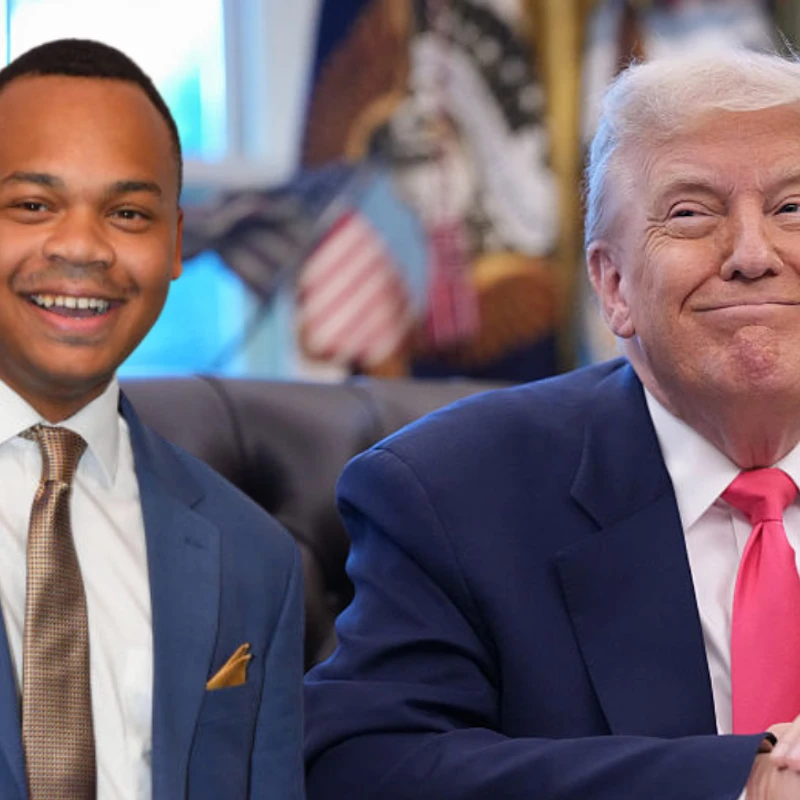
Remember CJ Pearson? The young influencer who went viral a decade ago for his fiery rebuke of then-President Barack Obama? Well, Pearson has evolved, and he’s now a prominent figure in the MAGA movement, actively working to sway Black voters toward supporting Donald Trump. His journey from a teenage critic to a leading voice in the conservative online space is quite a story.
From Obama’s Critic to Trump’s Advocate
Pearson first gained national attention in 2015 with a YouTube video criticizing President Obama’s invitation to Ahmed Mohamed, a Muslim student who was falsely accused of bringing a bomb to school after bringing a homemade clock to class. A 13-year-old Pearson argued that Obama’s priorities were misplaced, even bringing up the tragic death of Kate Steinle. “Mr. President…what are your priorities, because in all honesty, I think you’re being ignorant. I think you’re incompetent, and I think you don’t understand reality,” he stated.
Fast forward ten years, and Pearson is now a significant online influencer with over a million followers across TikTok, Instagram, and X. He hosts the “Family Matters” podcast, adopting a confrontational style reminiscent of Charlie Kirk. In one controversial episode, he questioned the romantic relationships of Black liberals with white people, using the provocative title “Woke In The Streets, White in The Sheets.”
The Face of the Next Generation of Black Conservatives
USA Today has profiled Pearson, describing him as the “face of the Black conservative movement’s next generation.” His focus is clear: “Right now, my priority is simply doing all I can to win young people over to our side and help us win the culture war because politics is downstream from culture,” he told the publication.
Since Donald Trump’s second inauguration in January, Pearson has reportedly seen a surge in both name recognition and income. He’s also signed with the Hollywood talent agency UTA and was recognized on the Time 100 list. However, the broader Black MAGA movement hasn’t achieved significant electoral success. High-profile campaigns like Herschel Walker’s Senate run and Mark Robinson’s gubernatorial bid faced controversy and ultimately defeat.
Challenges and Hopes for Conversion
Pearson acknowledges the difficulty, stating, “Being a Black Republican is not enough to win an election, so you’ve got to actually have a few other things going for you as well.” He emphasizes the need for strong fundraising and effective messaging. Despite Trump’s improved performance with Black voters in recent cycles, the majority still overwhelmingly voted for Kamala Harris in 2025 (83%). Furthermore, Republican gains with Black voters seemed to regress in the 2025 general election, suggesting that policies on DEI and economic handling aren’t resonating.
Nevertheless, Pearson remains optimistic about using his platform to attract more young and Black voters to the political right. He even harbors ambitions of running for office himself one day, wanting to give back to a country he feels has given him so much. Whether that path leads to elected office or another form of public service remains to be seen.
What do you think about CJ Pearson’s political evolution and his efforts to convert Black voters? Do you believe his message resonates? Share your thoughts in the comments below!