Category: Business and Technology

  • VC Math: Power Law & Outsized Returns

    Ever wondered how venture capitalists (VCs) decide which startups get funded and how they aim for those massive returns? It’s not just about spotting a good idea or a charismatic founder. The real secret lies in understanding the underlying math that drives the entire venture capital ecosystem. For founders looking to raise capital, grasping these principles can be the difference between playing blind and playing with a winning strategy.

    What Exactly is Venture Capital?

    At its heart, venture capital is a specialized form of private equity. VC firms raise substantial funds from investors known as Limited Partners (LPs). These LPs are typically large institutions like pension funds, university endowments, and family offices. They’re not just investing in innovation for its own sake; they’re seeking significant returns that can outperform the broader market – what’s known as generating ‘alpha’.

    The Uncomfortable Truth: Most VC Bets Fail

    Here’s a crucial reality check for founders: most venture-backed companies don’t succeed. This isn’t a judgment on talent or hard work; it’s baked into the VC model. The strategy relies on the expectation that while many investments will fail, a few will provide modest returns, and crucially, one or two will generate the vast majority of the fund’s overall success. This is the essence of the ‘Power Law’.

    • A typical VC portfolio might have 10 companies.
    • Six are expected to fail completely.
    • Two or three might return the initial investment but little more.
    • The entire fund’s success often rests on one or two companies delivering extraordinary returns.

    It’s All About Outsized Returns

    While ‘unicorns’ (startups valued at $1 billion+) get a lot of press, VCs are primarily judged by their ability to return capital to LPs, often at a multiple of 3-5x the original investment. This means an investment isn’t just evaluated as a ‘good business,’ but rather, ‘If this succeeds, can it return the entire fund?’ This focus drives VCs to favor companies with massive market potential and the ability to scale rapidly. Smaller, profitable businesses, while valuable, often aren’t ‘venture-backable’ because they can’t achieve these Power Law outcomes.

    How VCs Actually Make Money: The ‘2 and 20’ Model

    The economic engine of venture capital is often described by the ‘2 and 20’ model. The ‘2’ refers to the annual management fee, typically 2% of the fund’s assets under management. This fee covers the firm’s operational costs, like salaries, legal expenses, and travel. The ’20’ is the carried interest, or ‘carry,’ which is the VC firm’s share of the profits after the LPs have received their initial capital back.

    For example, if a $25 million fund returns $100 million, the first $25 million goes back to LPs. Of the remaining $75 million in profit, LPs typically get 80% ($60 million), and the VC firm gets 20% ($15 million). This carry, combined with management fees, is how VC firms generate significant revenue. However, these profits often take a long time to materialize.

    VC is a Long Game

    Unlike public markets, venture capital investments are illiquid. Returns are only realized when a company has an ‘exit’ – either through an acquisition or an Initial Public Offering (IPO). These exits typically take five to seven years, and more commonly, investments play out over a 10- to 12-year horizon. This long timeline underscores why VCs must project a company’s potential a decade into the future, not just its current performance.

    Understanding these mechanics – the Power Law, the ‘2 and 20’ model, and the long-term nature of investments – demystifies the venture capital industry. It reveals why VCs prioritize rapid scaling, why they might pass on seemingly good businesses that aren’t large enough, and why success is less about being right every time and more about being right in a way that generates significant returns.

    Are you a founder or an aspiring investor? How does understanding VC math change your perspective on startup funding? Share your thoughts in the comments below!

  • Kyle Kuzma Invests in Electric Racing

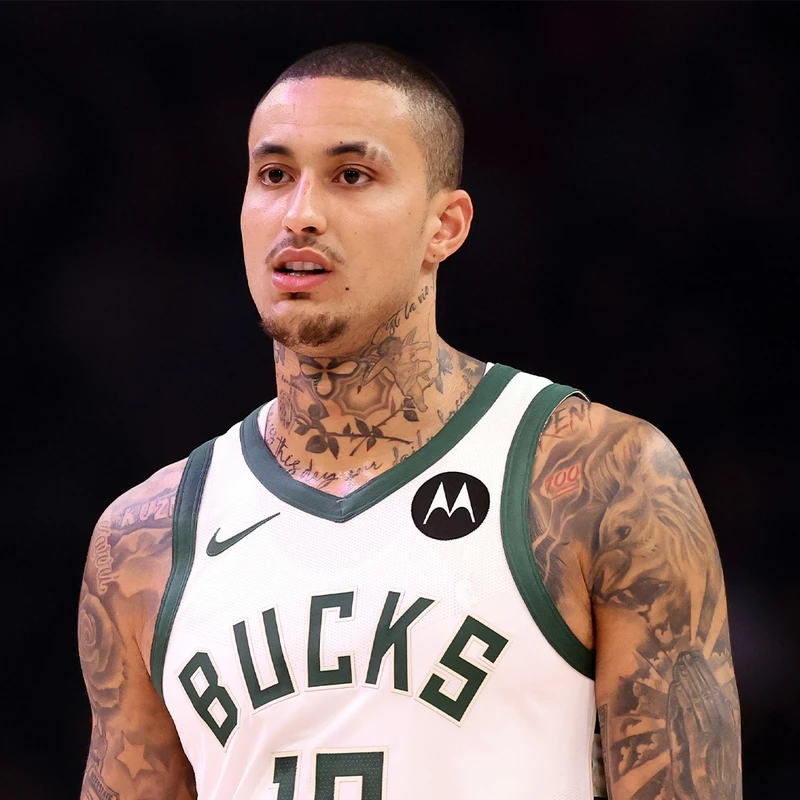
    Get ready for some exciting news from the world of sports and technology! NBA star Kyle Kuzma, currently with the Milwaukee Bucks, is making waves off the court by becoming a team owner in the UIM E1 World Championship. This isn’t just any racing league; it’s the first-ever all-electric foiling raceboat championship, aiming to push the boundaries of marine technology and environmental sustainability.

    A New Venture: Sierra Racing Club

    Kuzma has joined the ownership group of Sierra Racing Club, a team backed by Sierra Space. If that name sounds familiar, it’s a defense company focused on satellites, spaceplanes, and infrastructure for U.S. National Security. Their mission to sustain human presence in space and safeguard the nation aligns perfectly with the forward-thinking nature of the E1 championship.

    Driven by Innovation and Sustainability

    What drew Kuzma to this venture? He highlighted the unique blend of elite competition, technological innovation, and sustainability. “I’m always looking at where sport is going and where there’s an opportunity to build something pioneering within it,” Kuzma shared. He sees the E1 RaceBird, designed to literally fly above the water, as a glimpse into the future of engineering.

    With the aerospace heritage of Sierra Space providing a strong foundation, Kuzma believes he can bring his experience in business, sport, and culture to help position the team for long-term success. It’s a powerful combination of athletic insight and business acumen.

    A Powerful Partnership

    Dominik Madani, Co-Owner of Sierra Racing Club, expressed excitement about Kuzma’s arrival. He noted that Kuzma brings “international reach, competitive credibility, and creative authority” to the team. This collaboration is set to amplify the team’s efforts in pushing the boundaries of what sport can achieve.

    Kuzma isn’t the only big name investing in E1. He joins an impressive roster of celebrity team owners, including Tom Brady, LeBron James, and Will Smith. The 2026 season is set to be a global spectacle, with eight events planned across four continents.

    What do you think about Kyle Kuzma’s investment in electric racing? Let us know in the comments!

  • Cut 2025 Taxes, Boost 2026 Savings: Smart Strategies

    Want to keep more of your hard-earned money? Lowering your tax costs for 2025 and boosting your savings for 2026 is achievable with smart financial moves. By strategically shrinking your taxable income and taking advantage of available tax credits, you could save thousands of dollars. Acting quickly is key, as many tax benefits are time-sensitive and set to expire soon, while new legislation offers fresh opportunities.

    Maximize Retirement Contributions for Immediate Savings

    One of the most effective ways to cut your tax bill is by maximizing contributions to tax-advantaged retirement accounts. For the 2025 tax year, you can contribute up to $23,500 to traditional and Roth accounts combined. If you’re 50 or older, you can make additional catch-up contributions, potentially adding $7,500 or even more depending on your age and employer’s policy. Traditional contributions directly reduce your taxable income, offering immediate tax savings.

    Consider consulting a tax expert to ensure you’re taking full advantage of all eligible deductions and credits. Their guidance can be invaluable in navigating complex tax laws and tailoring strategies to your specific financial situation. Filing your 2025 taxes early can also be beneficial, potentially leading to a quicker refund or more time to manage tax payments.

    Leverage New Tax Breaks and Health Savings Accounts

    Recent legislation, like the “One Big Beautiful Bill Act,” introduces new tax breaks. Eligible individuals aged 65 and older may qualify for a $6,000 bonus deduction. Additionally, a portion of auto loan interest, up to $10,000 for qualifying vehicles, may be deductible for those with incomes below $100,000 (single filers) or $200,000 (joint filers). Workers might also claim exemptions on certain qualified tips and overtime pay.

    Health Savings Accounts (HSAs) offer another powerful way to decrease your federal tax income. You can contribute up to $4,300 for yourself or $8,550 for your family to an HSA-eligible high-deductible health plan. Funds used for medical expenses are tax-free, and contributions are made on a pre-tax basis, effectively lowering your taxable income.

    Income Deferral and Self-Employment Plans

    For freelancers or gig workers, deferring income can be a smart strategy. If possible, consider billing clients in a way that pushes income earned this year into next year. This can reduce your current year’s taxable income and delay the tax payment on that deferred income.

    Business owners and gig workers should also explore retirement plans for self-employment income, such as SEP IRAs or Solo 401(k)s. These plans can significantly lessen your taxable income. It’s crucial to act quickly, as setup and funding deadlines vary based on business structure. Consulting a tax expert promptly is recommended.

    As the new year approaches, staying open-minded about tax-saving strategies is essential. Consider exploring options like securing credit for home mortgages and deducting a share of home property taxes. Other ways to boost savings include filing taxes by the deadline to avoid fees, increasing retirement account contributions, and adding to 529 college savings plans.

    What tax-saving strategies are you planning to implement for 2025 and 2026? Share your tips and insights in the comments below!

  • TikTok Shop Surges with $500M Black Friday Sales

    TikTok Shop has shattered its previous records, raking in over $500 million in sales during the recent Black Friday–Cyber Monday weekend. This massive surge in revenue was significantly boosted by Black creators who leveraged the shopping frenzy to encourage consumers to support Black-owned businesses.

    Creators Championing ‘Buy Black’

    Influencers like Talia Cadet used their platforms to highlight Black-owned brands, urging followers to participate in the “Buy Black” movement. Cadet’s video, which garnered over 48,000 views, featured five Black-owned businesses, including Elle Vie’s body care products, Anima Iris’s leather bags, Danessa Myricks’ beauty sets, Elisa Johnson eyewear, and Oma the Label jewelry. She emphasized the holiday deals available, encouraging shoppers to stock up on gifts and personal favorites.

    Other creators, such as Fisayo OG, also spotlighted Black-owned beauty and shapewear brands like Meji Meji, Marviano Cosmetics, Fumi the Label, and Tarssee. The collective message from these creators was clear: make conscious choices to support Black entrepreneurs during the crucial holiday shopping season.

    Record-Breaking Sales Driven by Live Shopping

    The support for Black-owned businesses played a pivotal role in TikTok Shop’s success, contributing to a nearly 50% increase in U.S. shoppers compared to the previous year. The platform’s Live Shopping feature proved to be a major driver of these record-breaking results. Brands and creators found innovative ways to engage shoppers, entertain them, and foster brand loyalty through real-time interaction.

    Patrick Nommensen, head of strategic initiatives for TikTok Shop in the Americas, highlighted the power of Live Shopping: “Live Shopping is where brand love starts—it’s a dynamic, interactive experience that deepens how our users connect with brands on TikTok.” He noted that the immediate, real-time engagement helps build trust, strengthen community, and convert interest into long-term loyalty. Brands and sellers who hosted livestreams saw an impressive 84% increase in sales compared to the previous year.

    TikTok as a Discovery Platform

    TikTok continues to solidify its position as a go-to platform for product discovery, especially during the holiday season. Surveys indicate that one in three users turn to TikTok for holiday gift inspiration, and GlobalData reports that 83% of TikTok Shop shoppers discover new products there. As the holiday season progresses, the platform’s influence is expected to help Black-owned businesses reach even more consumers.

    Did you shop on TikTok this Black Friday–Cyber Monday weekend? What Black-owned businesses did you discover or support? Share your experiences in the comments below!

  • Fanbase & Pocstock: Get Paid for AI Training

    Ever thought your social media posts could be worth more than just likes and shares? Well, get ready, because Fanbase, the social platform founded by Isaac Hayes III, has just inked a deal with Pocstock, a diverse stock media library owned by Steve Jones. This exciting partnership is all about making sure you, the content creator, get paid for your digital creations that help train artificial intelligence (AI).

    Your Content, Your Compensation in the AI Era

    Fanbase has always been about empowering users to monetize their content from day one. Now, with this collaboration, they’re taking it a step further. As you post and engage on the platform, your content will also contribute to training AI models. And the best part? You’ll be compensated for it!

    Isaac Hayes III highlighted the significance of this move, stating, “This collaboration with Pocstock allows us to honor that value by making sure users are compensated for the content that helps build the future of AI and the entire social media ecosystem.” It’s a smart way to ensure creators are recognized and rewarded for their role in shaping the future of technology.

    Opening Doors for Creators in the AI Economy

    Steve Jones of Pocstock echoed this sentiment, emphasizing the goal of bringing creators into the burgeoning AI space. “This partnership is about opening the door for creators to the rapidly growing world of AI,” Jones explained. “AI is changing how our ideas are made and shared, and we want to make sure our community has a real place in the AI economy. Not just as consumers, but as producers.”

    This initiative is particularly crucial as AI becomes more integrated into our daily lives and industries. By valuing the contributions of everyday users and creators, Fanbase and Pocstock are setting a precedent for fair compensation in the age of artificial intelligence. It’s about ensuring that the people whose data fuels these powerful tools are also beneficiaries of their advancement.

    Investing in the Future of Fanbase

    For those interested in supporting this innovative venture, Fanbase is currently offering investment opportunities through StartEngine. This is a chance to get in on the ground floor of a platform that’s redefining creator economies and embracing the future of AI.

    Recent Developments and Future Projects

    This AI training partnership isn’t the only exciting news from Fanbase. Just recently, producer Ty Walker joined forces with Isaac Hayes III to leverage Fanbase for creating and distributing microdramas. With Fanbase’s existing support for short-form video, creator tools, and subscriptions, the platform is well-positioned for diverse content formats.

    • Monetize content from the moment you sign up.
    • Get paid for content used in AI training.
    • Be a producer, not just a consumer, in the AI economy.
    • Access robust creator tools and features.
    • Potential to invest in Fanbase’s growth.

    What are your thoughts on creators being paid for AI training data? Share your insights in the comments below!

  • Housing Market Offers Big Discounts to Buyers

    If you’ve been dreaming of buying a home but felt priced out, the current housing market might just be your lucky break! As interest rates hover above 6%, making monthly mortgage payments higher than in 2020, homeowners are increasingly being forced to lower their asking prices to stay competitive. This shift is creating massive discounts for potential buyers.

    A Cooling Market Creates Buyer Opportunities

    The housing market is definitely cooling down from the frenzy of the COVID-19 era, though it’s not entirely out of the woods yet. With inflation continuing to affect consumer spending, data from The Wall Street Journal reveals that approximately 20% of active home listings in October had seen a price cut. This indicates a significant number of sellers are adjusting their expectations.

    For homes priced at the higher end, this often means a longer wait time for sellers. Statistics from the National Association of Realtors show that listings with price cuts spend, on average, five times longer on the market compared to those initially priced correctly. However, housing experts see this as a positive development for both buyers and sellers.

    Record Discounts and Rebalancing Market

    Zillow Senior Economist Kara Ng explained to Fox Business that many homeowners have seen substantial increases in their home values over the past few years, giving them the flexibility to accept a price cut or two while still profiting. “These discounts are bringing more listings in line with buyers’ budgets, and helping fuel the most active housing market in three years,” Ng stated. “Patient buyers are reaping the rewards as the market continues to rebalance.”

    Homes that are priced accurately from the start tend to sell faster and often fetch 100% of their asking price. However, once a property has been on the market for about three months, sellers typically begin the process of lowering the price. Despite nationwide home prices still showing an upward trend, data from Redfin indicates that 2025 is shaping up to be the strongest buyer’s market in recent memory, with a significant surplus of sellers over buyers.

    Inventory Spikes in Key Markets

    This increase in housing inventory is particularly noticeable in East Coast states like Maryland (34% increase), Virginia (27%), and North Carolina (34%). Western states like Arizona (27%), Nevada (23%), and South Dakota (27%) also saw significant jumps, while Washington State sits at 25%. Major metropolitan areas are also experiencing this trend, with substantial reductions seen in cities across California. Los Angeles reported average price cuts of $61,000, San Francisco saw reductions of $59,001, San Jose homeowners offered an average discount of $70,900, and New York City’s median cumulative price cut was $50,000.

    Are you looking to buy a home? Have you noticed these discounts in your local market? Share your experiences and thoughts in the comments below!

  • Nike’s SNKRS Code Adds Mystery to Releases

    Nike is shaking up the sneaker game once again with its latest innovation: the SNKRS Code. This new password-based system is set to add a layer of mystery and discovery to limited edition releases, marking a significant shift in how sneakerheads interact with the SNKRS app.

    A New Approach to Limited Releases

    Forget the predictable draws or the frantic first-come, first-served system. Nike is now incorporating a secret password into the mix. The SNKRS Code requires users to find a hidden password, enter it, and then unlock access to the coveted sneaker drop. This approach injects an element of mystery into a process that had become somewhat predictable.

    It’s a move designed to reward dedicated fans who actively follow the stories and clues surrounding each shoe release. The Code can appear in various places – sometimes tied to trivia questions, hidden within SNKRS posts, embedded in partner content, or revealed through clues related to a shoe’s backstory. Nike is encouraging users to dig around and pay close attention, turning the search for the Code into a game akin to treasure hunting.

    Combating Bots and Enhancing User Experience

    This new strategy aligns with Nike’s ongoing efforts to enhance the SNKRS app experience. Over the years, Nike has gradually introduced more layers to its drops, including exclusive access, shock restocks, and early purchase windows based on user behavior. The SNKRS Code represents the next logical step in this evolution.

    By implementing a hidden password system, Nike aims to regain more control over its releases, significantly limit the effectiveness of bots, and, most importantly, bring back some of the fun and excitement that had been diminished by predictable release mechanics. This interactive method creates anticipation without solely relying on speed or luck, making the process feel more engaging and rewarding for genuine enthusiasts.

    How the SNKRS Code Works

    The SNKRS Code functions as a hidden key that unlocks the purchase page for exclusive items. Users must first locate the specific word or phrase, which might be found in a Nike post, a partner message, or a hint connected to the product’s narrative. Once the correct code is entered, the path to purchasing the exclusive item is opened.

    This approach not only makes releases more interactive but also addresses the persistent issue of bots, which have plagued Nike and other brands for years. By leveraging technology to create a more equitable release process, Nike is making a positive move towards ensuring that dedicated fans have a better chance at securing their desired sneakers.

    What do you think of Nike’s new SNKRS Code? Does this add excitement to sneaker releases, or does it feel like too much work? Let us know your thoughts in the comments below!