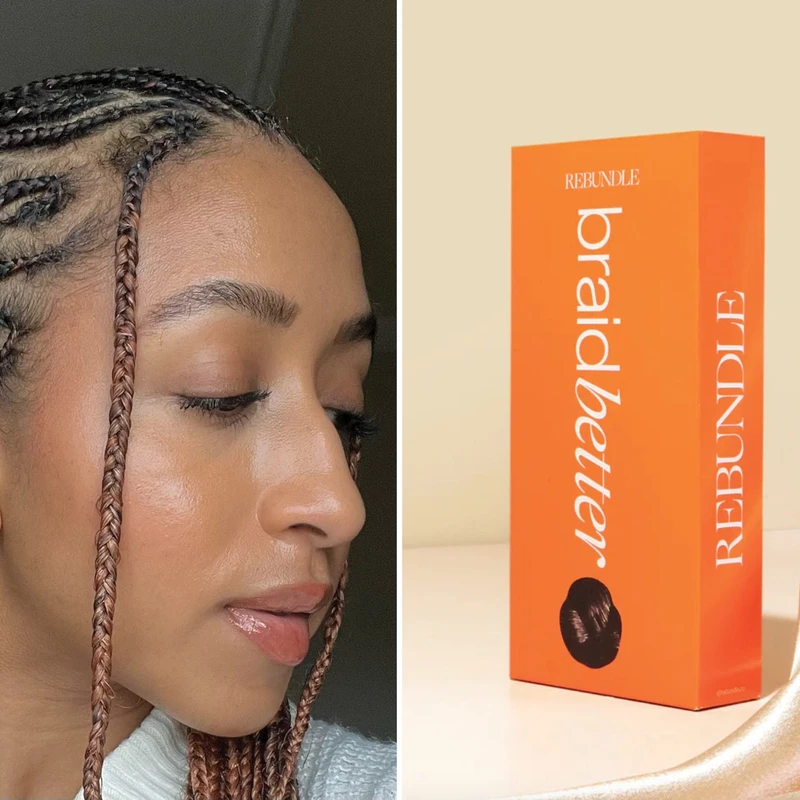
Protective styles, especially braids, are a cornerstone of Black hair care. However, many of us have come to realize that these beloved styles can sometimes cause more harm than good. If you’ve ever experienced that almost unbearable tension from fresh braids, you know the potential risks. I decided to take a year off from braids to give my hair a much-needed break and recover from traction alopecia that had begun to develop.
Restoring My Edges: The First Step
Simply pausing braids wasn’t enough to bring my edges back. I needed to completely ditch high-tension styles to give my delicate baby hairs a real chance to recover. This meant embracing weekly wash-and-go styles and occasional blowouts, focusing on minimal manipulation. This allowed my scalp and hair to breathe, making it easier to apply restorative serums without worrying about reversion.
During this year, I experimented with several hair growth serums. The Cécred Restoring Hair & Edge Drops proved to be the most effective. Within the first month, I noticed visible new growth, and after six months of daily use, I now have them on auto-replenishment. I was initially skeptical, but they truly delivered remarkable results.
Understanding Traction Alopecia and Hair Damage
Braiding itself isn’t inherently damaging, but the technique, the type of extensions used, and the maintenance routine are critical factors. That intense pulling sensation often associated with fresh braids is a primary contributor to traction alopecia, which results from prolonged tension on hair follicles. Overly tight braiding and rough synthetic hair can lead to breakage not just at the root, but along the entire hair shaft.
Wearing protective styles for too long (typically more than 4-6 weeks) can exacerbate this tension, leading to severe breakage and even permanent hair loss that can take years to reverse. It’s a delicate balance between achieving a desired look and preserving the long-term health of your hair.
Beyond Hair: The Health Impact of Synthetic Extensions
The health implications of synthetic braiding hair are also a significant concern. Research has indicated that some synthetic braiding hair contains carcinogenic chemicals like benzene and lead. These substances can lead to serious health issues, including reproductive problems, extending far beyond simple scalp irritation.
Discovering a Healthier Alternative: Rebundle
After experiencing breakage and dryness from my last few sets of box braids, I sought a healthier alternative to traditional kanekalon hair. I discovered Rebundle, a Black woman-owned company that uses banana fiber-derived braiding hair. Their patented technology is designed with hair health in mind, being microbiome and eczema-friendly, which helps avoid the irritation often caused by synthetic extensions.
Ciara Imani May, the founder of Rebundle, shared her vision: “Rebundle started a global movement for safe, non-toxic hair extensions, and now the consumer is demanding better. We’re rewriting the narrative of what beauty innovation looks like — it’s science-led, eco-conscious, and community-driven.” Rebundle’s plant-based hair offers a soft, supple texture that feels like well-moisturized hair, a stark contrast to the friction caused by synthetic options.
Returning to Braids with a Focus on Health
After a year of embracing my natural hair, I was eager to return to braids, but this time, finding a braider who prioritized hair health was paramount. I found Helena Koudou of Slayed In Braids in Brooklyn, an artist whose intricate designs balance both function and form. She reassured me that braiding without causing damage is not only possible but achievable.
We collaborated on a Fulani-inspired half-cornrow, half-box braid style, using a blend of Rebundle’s Honey and Chocolate fibers to match my colored hair, along with their laidbetter Edge Gel and cloud9 Braid Setting Mousse. The most surprising part? The complete lack of tension. Helena’s gentle technique allowed for a pain-free braiding experience, giving me confidence that my hair, especially my fragile edges, would be preserved.
Maintaining Optimal Hair Health
The combination of Rebundle’s moisturizing extensions and Helena’s expert technique has left me feeling confident that my hair is truly protected. I’m continuing my nightly routine with Cécred Edge Drops for new growth and using The Steam Bar Scalp Serum to soothe dryness. Taking a year off from braids was challenging, but seeing my hair and edges flourish again made it incredibly worthwhile.
Have you experienced traction alopecia or sought healthier braiding alternatives? Share your journey and tips in the comments below!
Leave a Reply