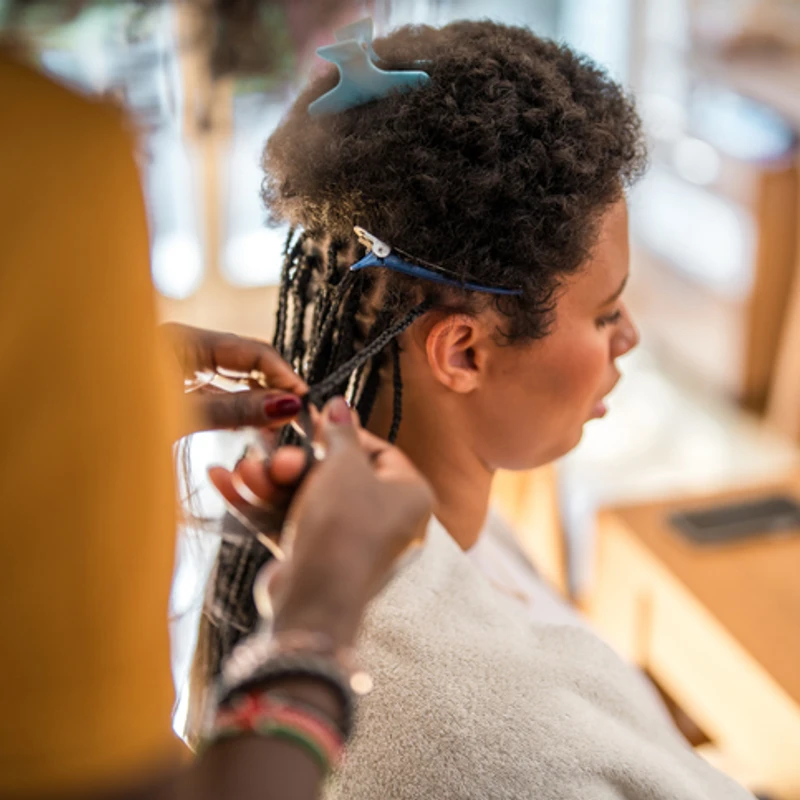
If you’ve ever left a braiding salon with your edges feeling painfully tight, or endured nights of discomfort after a fresh hair installation, you know the experience this story addresses. There’s a subtle, yet pervasive, form of gaslighting happening within the Black beauty industry, and a surprising reason why so many of us have endured it for so long.
The ‘Beauty is Pain’ Myth
For years, the prevailing message was simple: ‘Beauty is pain.’ If you dared to mention discomfort – the itching, redness, bumps, or even scabs along the hairline – the response was often a variation of, ‘Girl, you’ll get used to it.’ We accepted this, treating the pain as an unavoidable ‘tax’ for embracing cultural hairstyles passed down through generations.
The industry rarely questioned the source of the discomfort. Instead, the narrative subtly shifted the blame, implying that Black women were simply ‘tender-headed’ or that their scalps couldn’t handle the process. Phrases like ‘Keep your head still,’ ‘Stop being tender-headed,’ and ‘It will be worth it’ were common refrains. This wasn’t about fostering beauty culture; it was gaslighting disguised with a rattail comb and some grease.
Toxic Ingredients in Our Hair
The issue goes deeper than just tight braids. A groundbreaking investigation by Consumer Reports in early 2025 revealed that nearly all popular synthetic braided hair products on the market contained toxic heavy metals and carcinogens like lead, benzene, and methylene chloride. These substances are linked to serious long-term health consequences, including cancer and reproductive harm.
Consider this: millions of Black women have spent hours upon hours with these materials in their hair, across generations, in salons, at home, and in dorm rooms. The industry’s response for decades? Advise soaking hair in apple cider vinegar and managing expectations. With nearly 72% of Black women wearing hair extensions annually, often for weeks at a time, this exposure has been chronic and repeated.
Breaking the Cycle of Silence
The cultural conditioning around hair has taught many of us from childhood that suffering is part of the process. A tight scalp meant a style would last longer; bleeding edges were the price for long-lasting box braids. This cycle continued because we were never given a reason to question it.
Diann Valentine, founder of SLAYYY Hair, aptly stated, ‘We didn’t need to recreate the wheel, but we needed to answer the call of Black women who are suffering in silence at the hands of just trying to wear a protective style or a cultural style that is truly native to who we are.’ The phrase ‘suffering in silence’ encapsulates the experience – we weren’t being dramatic or ‘tender-headed’; we were being harmed, and the industry often told us to be quiet about it.
Thankfully, the conversation is shifting. Recognizing that the pain was never normal is the crucial first step. Black women deserve better, and acknowledging this truth is vital for moving forward. The industry must prioritize the health and comfort of its clients, ensuring that cultural styles are celebrated without causing harm.
What are your experiences with the Black beauty industry? Have you encountered this ‘quiet gaslighting’? Share your thoughts and stories in the comments below.
Leave a Reply