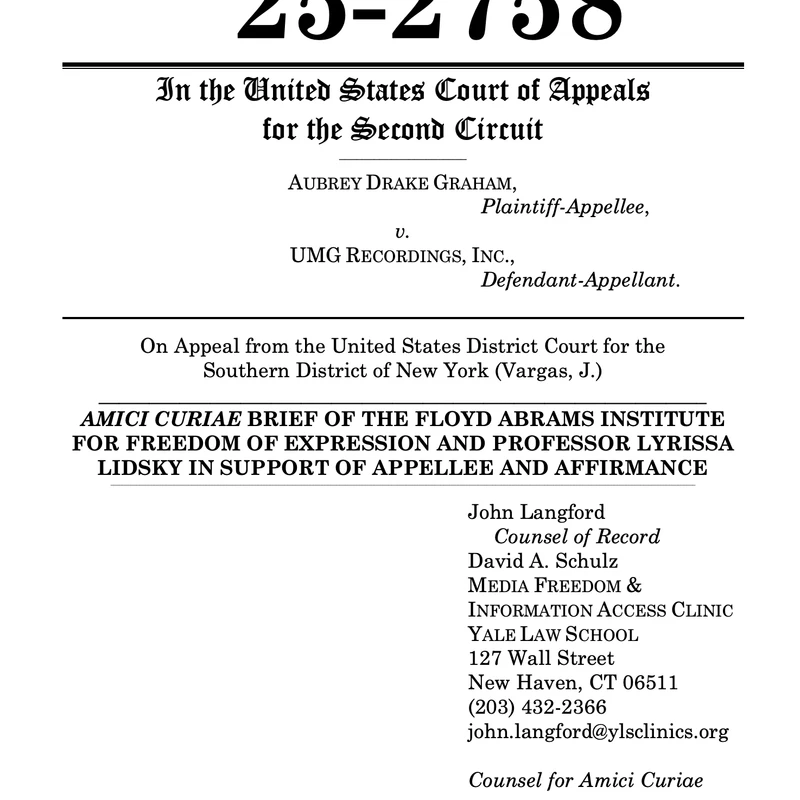
Well, it looks like Drake’s legal troubles are far from over! In a surprising turn of events, new legal briefs filed on April 3rd are actually siding with Kendrick Lamar’s explosive diss track, “Not Like Us.” This latest development could be a major setback for the superstar rapper in his ongoing defamation lawsuit.
Yale Weighs In on the Rap Feud
Two significant legal briefs have landed before the United States Court of Appeals for the Second Circuit. These filings are urging the court to uphold a previous October 2025 ruling. That ruling essentially declared Kendrick Lamar’s “Not Like Us” as protected opinion, not defamation. It’s a complex legal dance, and these new briefs are adding some serious weight to UMG Recordings’ side.
One of the most notable briefs comes from the Floyd Abrams Institute for Freedom of Expression at Yale Law School. Their argument? Drake essentially opened the door for the very lyrics he’s now suing over. Imagine inviting someone to a party and then getting mad when they show up – that’s kind of the vibe here!
A “Clear Call-and-Response”?
The Yale filing specifically states, “It is difficult to imagine a clearer call-and-response.” The scholars suggest that Drake encouraged Lamar to bring up sensitive allegations during their public rap battle. Then, when Lamar did exactly that in “Not Like Us,” Drake objected. It’s a fascinating perspective on the dynamics of rap beefs.
The Nature of Diss Tracks
Adding to this, a second filing from a group of legal scholars and social scientists argues a broader point: diss tracks aren’t meant to be taken as literal truth. They contend that the very nature of these songs is hyperbole and performance, not factual reporting. This perspective is crucial when dissecting lyrics in a legal context.
Diss track lyrics are far from factual representations. This assumption is not just faulty. It is dangerous. — Legal Scholars and Social Scientists Brief
Drake, the Grammy-winning artist behind hits like “Hotline Bling,” initiated the lawsuit against UMG in January 2025. He claimed the company knowingly promoted false accusations within Lamar’s song. “Not Like Us,” released during their intense rap battle, became an instant cultural phenomenon, even earning Lamar, a Pulitzer Prize winner, significant attention.
What Does This Mean for Drake?
This legal battle highlights the blurry lines between artistic expression, opinion, and defamation, especially within the charged world of hip-hop. The arguments presented by Yale and other scholars suggest that the courts might be leaning towards protecting the creative, often exaggerated, nature of diss tracks.
It’s a complex situation with major implications for artists and the music industry. The outcome could set precedents for how lyrical content is viewed in legal disputes moving forward. We’ll be keeping a close eye on how this unfolds!
What are your thoughts on these legal briefs? Do you think diss tracks should be considered protected opinion? Let us know in the comments below!
Leave a Reply